Part I-Spiritual Gifts: Spiritual Formation
What If Growing Closer to God Reveals More Than Your Gifts?
What if growing closer to God helped you discover not only what you’re gifted to do, but who God created you to become? Spiritual formation reminds us that our relationship with God is not simply about discovering our abilities, but allowing Him to shape our character, desires, and purpose. As we grow in intimacy with God, our spiritual gifts become less about recognition and more about serving others and building up the body of Christ. The goal is not merely to become more gifted, but to become more like Christ. When we know the Giver, we begin to understand the purpose of the gifts He has given us.
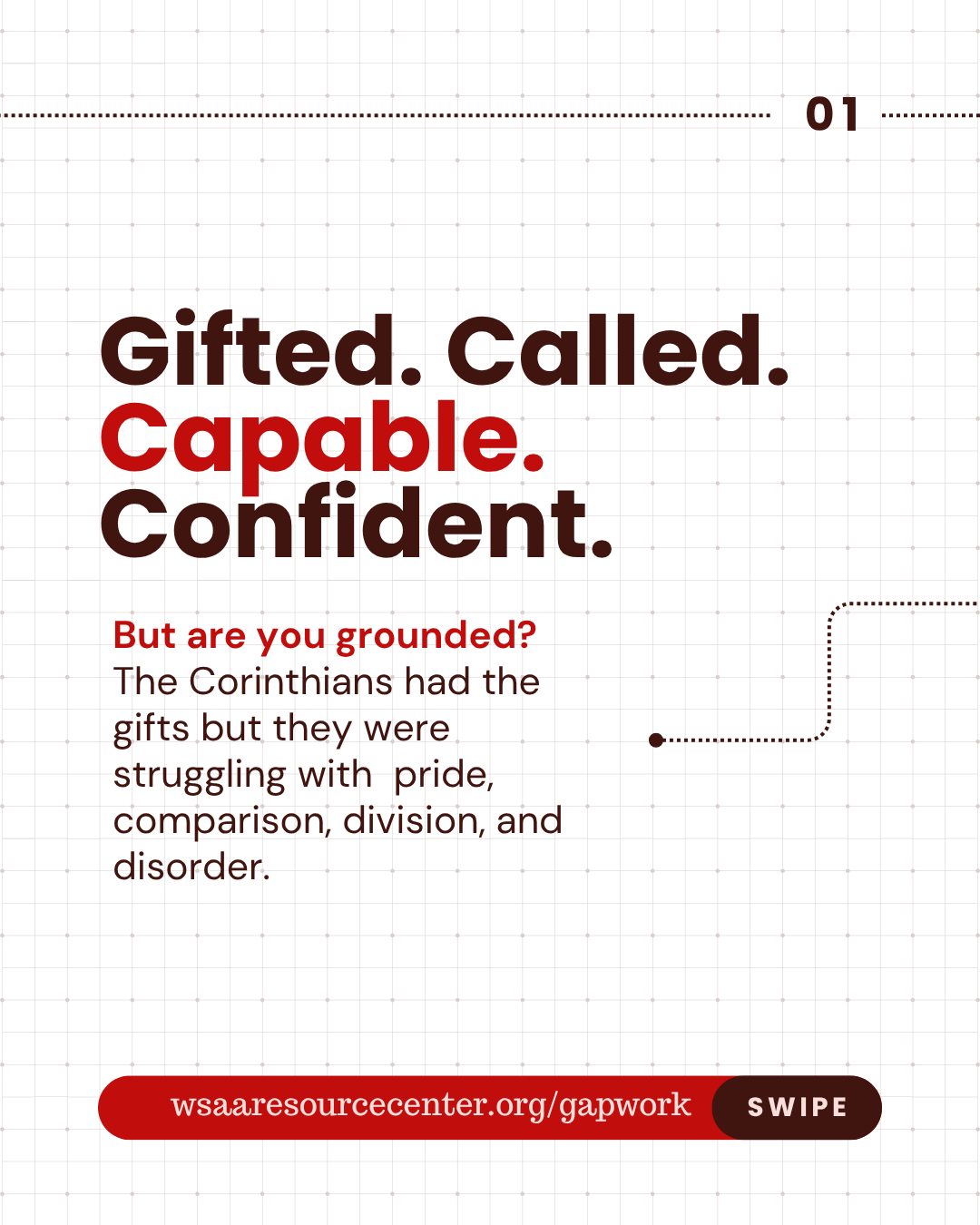
Have you ever worked with someone who was incredibly talented, but their attitude made it difficult for everyone to work together? Or maybe you’ve been part of a team where people started comparing who was more important, whose ideas carried the most weight, or who deserved the most recognition?Have you ever worked with someone who was incredibly talented, but their attitude made it difficult for everyone to work together? Or maybe you’ve been part of a team where people started comparing who was more important, whose ideas carried the most weight, or who deserved the most recognition? It’s amazing how quickly something that should bring people together can become a source of competition and division. The Corinthians understood this struggle well. They were a gifted church, but their gifts had become a source of pride, comparison, and division rather than unity and service. Their story is surprisingly relevant to us because it reminds us that being gifted does not automatically mean being spiritually mature. Before we can understand what Scripture teaches about spiritual gifts, it helps to understand who the Corinthians were, what was happening in their church, and why Paul felt it was necessary to address these issues.
Culture, Conflict & Calling
The Corinthians were the Christians living in Corinth, an important and prosperous Greek city located in southern Greece. Corinth was a commercial powerhouse, a bustling first-century city where merchants, travelers, tradespeople, wealthy elites, and people from diverse cultures and religions converged, creating a vibrant marketplace of commerce, culture, entertainment, and competing beliefs. The Christian congregation there was established through the ministry of Paul, who spent significant time preaching and teaching in the city, Acts 18:1–18. Paul wrote 1 Corinthians to address serious questions and problems within the congregation, including divisions, immorality, disputes, worship practices, and confusion about spiritual gifts. The letter was especially important because the Corinthian believers were learning how to live as followers of Christ in a culture filled with competing religious beliefs and practices. Their spiritual gifts had become a source of comparison, pride, and disorder rather than unity and service.
Corinthians to address serious questions and problems within the congregation, including divisions, immorality, disputes, worship practices, and confusion about spiritual gifts.
Paul explained that spiritual gifts come from the same Holy Spirit, are distributed according to God's will, and are intended for the common good, 1 Corinthians 12:4–11. Paul used the human body as an illustration to show that many different parts can function together as one body, 1 Corinthians 12:12–27. No believer should feel inferior because their gift seems less impressive, and no believer should consider themselves more important because of the gift they possess. This teaching is important because it shifted the focus from “What gift do I have?” to “How does God want me to use what He has given me?” Ultimately, genuine spiritual gifts should build up the body of Christ, promote unity, and operate in love rather than pride or competition.


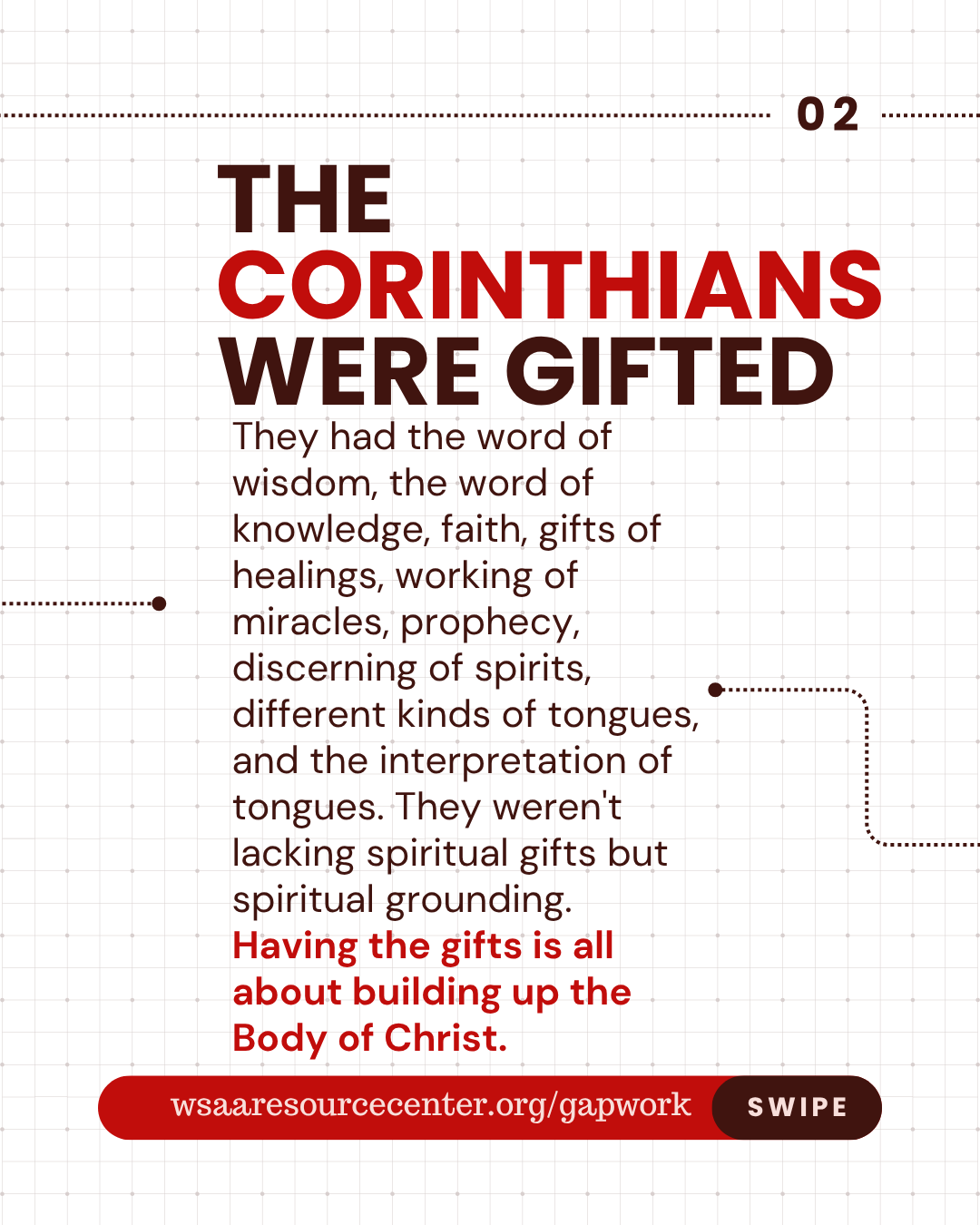
Every part is valuable, including the parts that may appear weaker or less prominent. When one member suffers, the whole body suffers; when one member is honored, the whole body rejoices. Paul concludes by emphasizing that God intentionally gives different gifts and places different people in different roles within the church. The chapter's central lesson is that diversity of gifts should produce unity, not division. And Paul's final transition into chapter 13 makes the ultimate point that even genuine spiritual gifts are incomplete without intimacy and love.
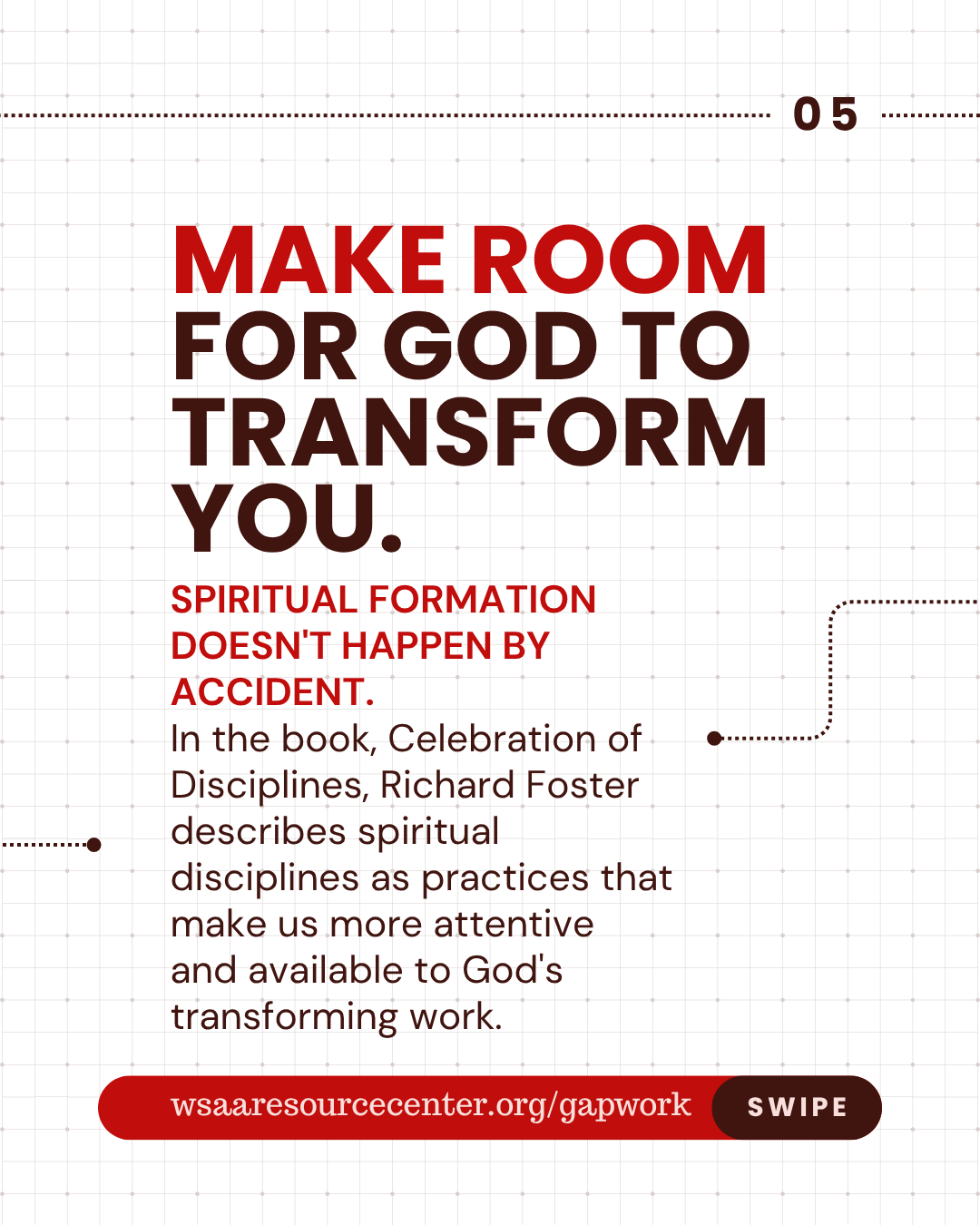
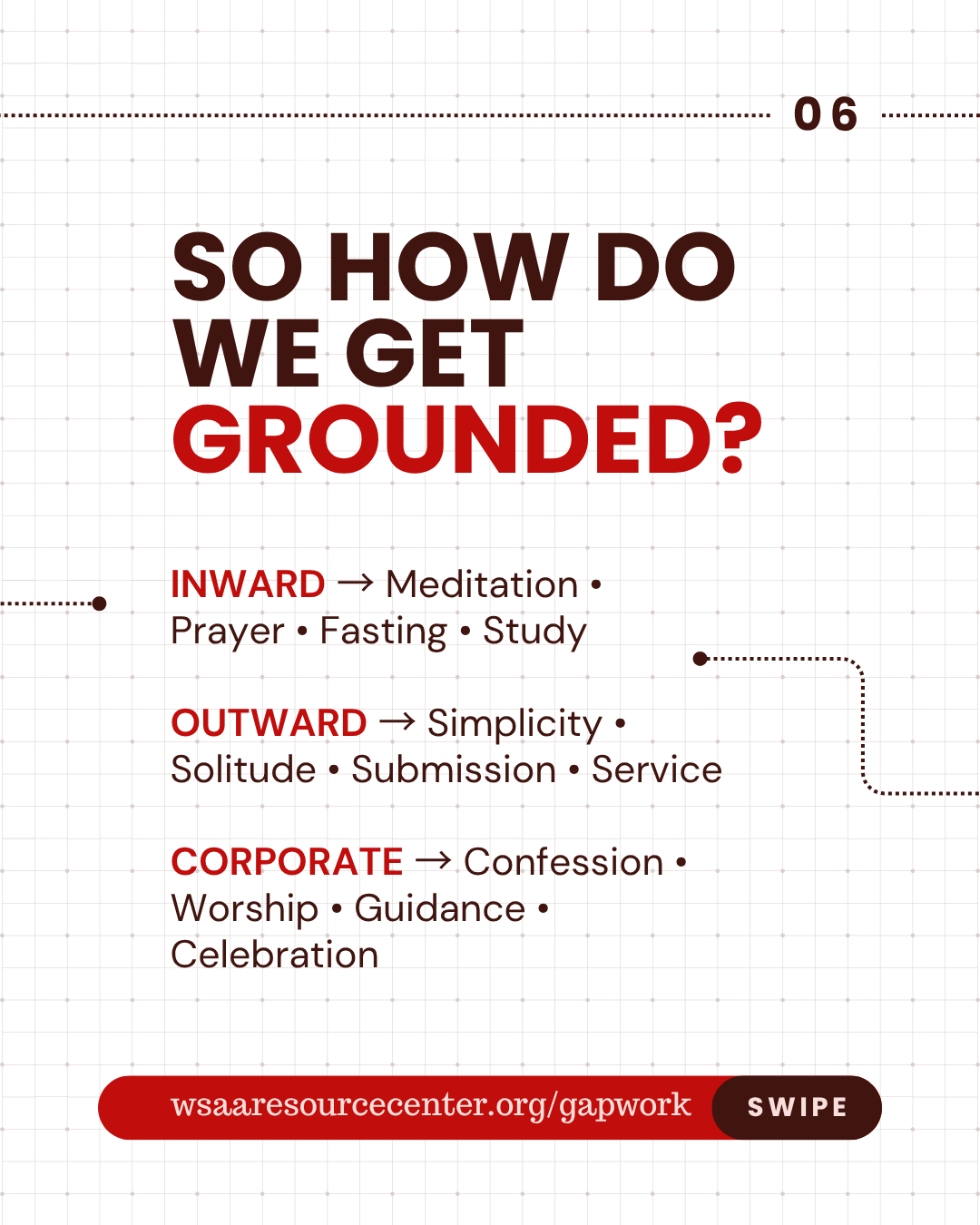
Intimacy with God is the foundation of a life that is spiritually steady and deeply rooted in truth. Without it, spiritual understanding can become scattered, emotional, or influenced by shifting ideas. God’s Disciplines serve as intentional pathways that draw the heart into closeness with Him. Through inward, outward and corporate disciplines, we become anchored in His Word and the heart becomes more aware of His presence. These practices are not about religious effort but about relationship and transformation. Over time, they shape desires, thoughts, and decisions so that life begins to reflect God’s character more clearly. They also create space for clarity in a world filled with competing voices. In this place of intimacy, spiritual growth becomes steady, personal, and deeply anchored in truth.Richard Foster’s Celebration of Discipline is essentially a guide to this growth and maturity as a disciple of Jesus Christ. Foster argues that spiritual growth does not happen merely by knowing more about Christianity; we cooperate with God by practicing habits that make us more attentive and available to His transforming grace. Importantly, these disciplines are not ways to earn salvation or God’s love. They are ways of putting ourselves in a position where God can change us. Foster organizes twelve classic Christian disciplines into three groups; inward disciplines(meditation, prayer, fasting, and study); outward disciplines (simplicity, solitude, submission, and service); and corporate disciplines (confession, worship, guidance, and celebration).
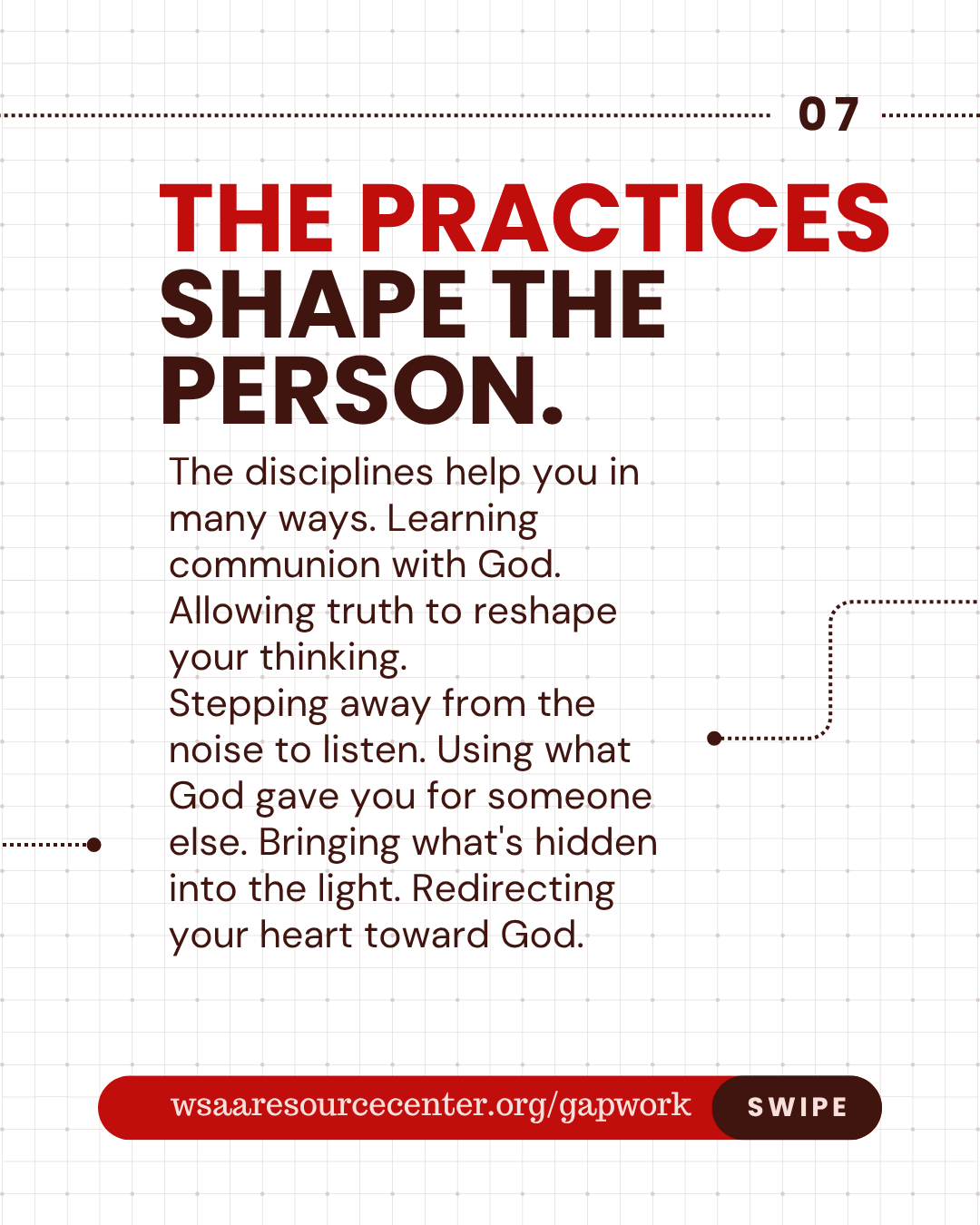
Prayer teaches us communion with God; Scripture and meditation reshape our minds; fasting exposes what controls us; simplicity and solitude loosen our dependence on possessions and busyness; submission and service teach us humility; confession brings sin into the light; worship turns our hearts toward God; guidance helps us discern His direction within Christian community; and celebration teaches us to live with gratitude and joy. The goal is not to become a person who simply performs religious exercises, but to become increasingly like Christ. Foster's larger point is beautifully summarized in his statement that the purpose of the disciplines is liberation from the stifling slavery to self-interest and fear.

The Disciplines
Master Reference Block
Inward Disciplines
Meditation
Meditation is the practice of intentionally focusing on God's Word, character, and works so that the mind and heart are transformed by His truth.
Psalm 1:2–3, But whose delight is in the law of the Lord, and who meditates on his law day and night. That person is like a tree planted by streams of water, which yields its fruit in season and whose leaf does not wither—whatever they do prospers.
Prayer
Prayer is ongoing communication with God through praise, thanksgiving, confession, petition, and surrender to His will.
Philippians 4:6, Do not be anxious about anything, but in every situation, by prayer and petition, with thanksgiving, present your requests to God.
Fasting
Fasting is voluntarily abstaining from food or other legitimate things for a period of time to seek God with greater focus and dependence.
Matthew 6:17–18, But when you fast, put oil on your head and wash your face, so that it will not be obvious to others that you are fasting, but only to your Father, who is unseen; and your Father, who sees what is done in secret, will reward you.
Study
Study is the disciplined pursuit of understanding God's Word so that it shapes beliefs, actions, and spiritual growth.
2 Timothy 3:16–17, All Scripture is God-breathed and is useful for teaching, rebuking, correcting and training in righteousness, so that the servant of God may be thoroughly equipped for every good work.
Outward Disciplines
Simplicity
Simplicity is living with contentment and freedom from the control of material possessions so that devotion to God remains central.
Matthew 6:33, But seek first his kingdom and his righteousness, and all these things will be given to you as well.
Solitude
Solitude is intentionally withdrawing from distractions and noise to spend focused time alone with God.
Mark 1:35, Very early in the morning, while it was still dark, Jesus got up, left the house and went off to a solitary place, where he prayed.
Submission
Submission is willingly yielding to God's authority and humbly serving others in obedience to Christ.
Ephesians 5:21, Submit to one another out of reverence for Christ.
Service
Service is expressing Christ's love through humble actions that meet the needs of others and glorify God.
Galatians 5:13, You, my brothers and sisters, were called to be free. But do not use your freedom to indulge the flesh; rather, serve one another humbly in love.
Corporate Disciplines
Confession
Confession is honestly acknowledging sins before God and trusted believers to receive forgiveness, healing, and restoration.
James 5:16, Therefore confess your sins to each other and pray for each other so that you may be healed. The prayer of a righteous person is powerful and effective.
Worship
Worship is responding to God's greatness with reverence, praise, adoration, and wholehearted devotion.
John 4:24, God is spirit, and his worshipers must worship in the Spirit and in truth.
Guidance
Guidance is seeking and following the direction of the Holy Spirit through Scripture, prayer, and wise counsel from fellow believers.
Proverbs 3:5–6, Trust in the Lord with all your heart and lean not on your own understanding; in all your ways submit to him, and he will make your paths straight.
Celebration
Celebration is joyfully rejoicing in God's goodness, faithfulness, blessings, and salvation with gratitude and praise.
Philippians 4:4, Rejoice in the Lord always. I will say it again: Rejoice!
The purpose of these disciplines is not religious performance but spiritual transformation. As believers practice meditation, prayer, fasting, study, simplicity, solitude, submission, service, confession, worship, guidance, and celebration, they become more like Christ, more sensitive to the Holy Spirit, and more effective members of the Body of Christ. Together, these disciplines cultivate a vibrant faith that glorifies God and strengthens His Church.
As we grow in spiritual formation, we also need to grow in spiritual discernment. Intimacy with God teaches us to recognize His voice, but discernment teaches us to recognize what sounds spiritual without actually leading us to God. The Corinthians lived in a culture filled with competing religions, spiritual practices, and claims of supernatural power, and believers today face a similar landscape in modern forms. Part II moves from formation to discernment, examining the spiritual practices described in Scripture alongside their ancient and modern expressions, not to create fear, but to help us recognize the difference between seeking God and seeking spirituality apart from God.
Learn more and Grow Stronger In Faith, Foundation and your Future with the Spiritual Gifts Series