Heaven’s Hierarchy & the Government of God
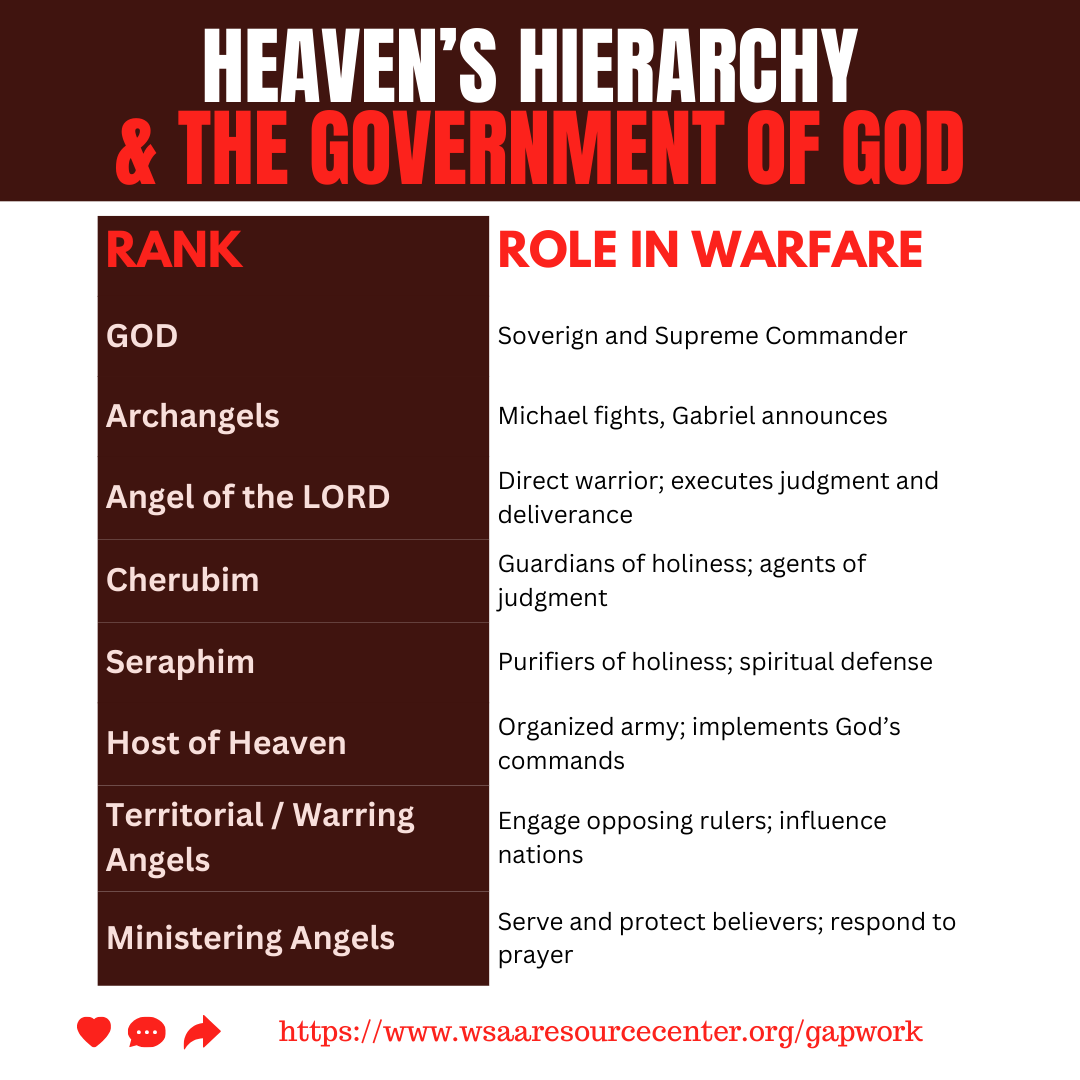
We live in an age that resists authority yet longs for order. We distrust hierarchy but crave justice. We question governance while demanding outcomes. And in the middle of cultural chaos, Scripture pulls back the veil and reveals something powerful; heaven is not a democracy, it is a kingdom.
God’s government does not adjust to human preference. It advances purpose. It enforces holiness. It intervenes in history. And it employs heavenly agents Michael, the hosts, ministering spirits; to execute His will across nations and generations. The question is not whether God governs, but whether we recognize that His government still stands, still rules, and still acts.
This matter is by the decree of the watchers, and the demand by the word of the holy ones: to the intent that the living may know that the most High ruleth in the kingdom of men, and giveth it to whomsoever he will, and setteth up over it the basest of men. -Daniel 4:17
God – Supreme Commander
Ultimate authority over all angelic forces; initiates and commands all spiritual warfare.
Psalm 103:19 (KJV)
"The LORD hath prepared his throne in the heavens; and his kingdom ruleth over all."
Daniel 4:17 (KJV)
"This matter is by the decree of the watchers, and the demand by the word of the holy ones: to the intent that the living may know that the most High ruleth in the kingdom of men, and giveth it to whomsoever he will, and setteth up over it the basest of men."
1. Michael – Archangel, Leader of God’s Heavenly Armies
Daniel 10:13
"But the prince of the kingdom of Persia withstood me one and twenty days: but, lo, Michael, one of the chief princes, came to help me; and I remained there with the kings of Persia."
Revelation 12:7
"And there was war in heaven: Michael and his angels fought against the dragon; and the dragon fought and his angels."
Michael is described as the chief angelic prince and commander of God’s spiritual army. In Daniel, he assists in spiritual warfare against opposing forces (“prince of Persia”), showing that angels are actively engaged in unseen battles over nations. In Revelation, he leads heaven’s army directly against Satan and his forces, symbolizing God’s ultimate authority and protection of His people. Michael embodies courage, leadership, and divine intervention in spiritual conflict.
2. Gabriel – Messenger and Divine Herald in God’s Campaigns
Daniel 8:16
"And I heard a man’s voice between the banks of Ulai, which called, and said, Gabriel, make this man to understand the vision."
Luke 1:19
"And the angel answering said unto him, I am Gabriel, that stand in the presence of God; and am sent to speak unto thee, and to shew thee these glad tidings."
Gabriel is primarily a messenger angel, but not just any messenger he is God’s herald in strategic, divine plans. In Daniel, he explains visions that relate to God’s sovereign control over empires and the coming of Messiah. In Luke, he announces the births of John the Baptist and Jesus, pivotal events in God’s redemptive campaign. While not depicted as a warrior in battle like Michael, Gabriel is instrumental in conveying divine strategy and timing, essentially a “field general” in God’s heavenly operations.
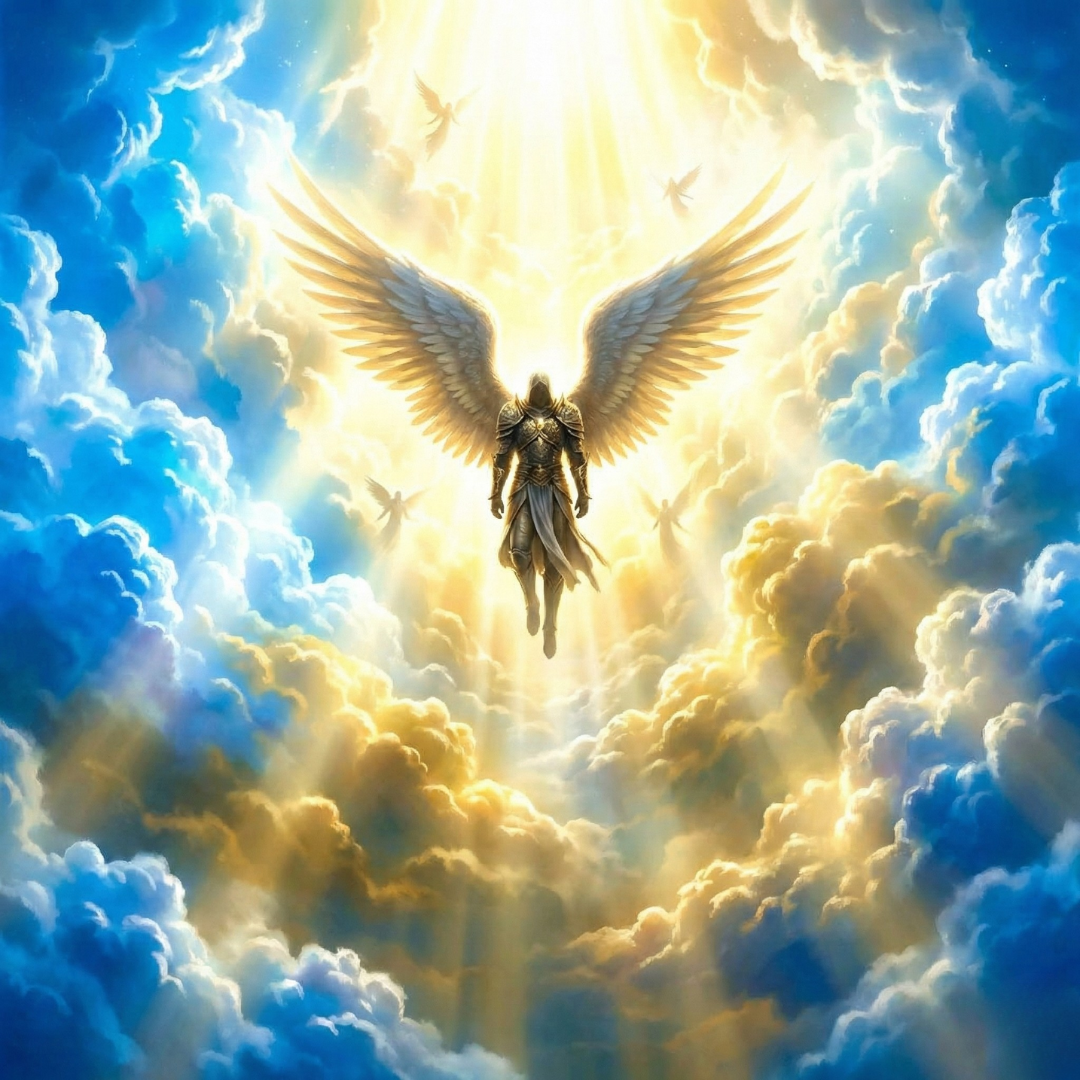
3. The “Host of Heaven” – Collective Angelic Army Executing God’s Will
Scripture repeatedly describes angels as organized, disciplined armies, not chaotic or independent spirits. They carry out God’s commands in battle, protection, and judgment.
1 Kings 22:19–22
"And he said, Hear thou therefore the word of the LORD: I saw the LORD sitting on his throne, and all the host of heaven standing by him on his right hand and on his left."
Joshua 5:14
"And he said, Nay; but as captain of the host of the LORD am I now come."
Here, an angelic figure identifies Himself as the commander of God’s army, showing that angels have a hierarchical, military structure, executing divine orders in preparation for Israel’s conquest of Canaan.
Psalm 103:20
"Bless the LORD, ye his angels, that excel in strength, that do his commandments, hearkening unto the voice of his word."
Angels are described as strong, obedient, and organized forces, carrying out God’s commands faithfully.
“The Host of Heaven” refers to the entire assembly of angels who serve God’s purposes. In 1 Kings, we see them in a vision around God’s throne, where decisions are made for earthly events, including battles. Angels are described as instruments of God’s will, carrying out judgments, delivering messages, and executing His strategic purposes on earth. They are not just spiritual beings; they are organized, militarized, and responsive to God’s commands. The term “heavenly hosts” emphasizes that angelic warfare is structured and purposeful, not sporadic. Angels act under God’s authority, protecting His people and executing His judgment. They are like divine soldiers, disciplined and powerful.
4. The Angel of the LORD — Divine Warrior
The Angel of the LORD is a unique, fearsome figure who speaks and acts with God’s authority, often indistinguishable from God Himself in power and judgment. This angel executes deliverance, protection, and destruction, particularly in warfare or when God’s people are threatened.
Exodus 14:19
"And the angel of God, which went before the camp of Israel, removed and went behind them; and the pillar of cloud went from before their face, and stood behind them."
Here, the Angel of the LORD leads Israel out of Egypt and positions Himself strategically between them and Pharaoh’s army. He is not passive but actively intervenes in battle.
2 Kings 19:35
"And it came to pass that night, that the angel of the LORD went out, and smote in the camp of the Assyrians an hundred fourscore and five thousand..."
This is an extraordinary display of God’s judgment carried out through His angel instant, massive, and decisive, showing the angel as a divine warrior executing God’s will.
The Angel of the LORD operates as a manifestation of God’s presence in conflict, a direct agent of judgment and protection. Often, He instills fear, delivers victory, and ensures God’s sovereignty is recognized. This angel represents God’s sovereign power in war, not a mere messenger.
5. Cherubim – Warrior Angels and Guardians of God’s Throne
Ezekiel 10:1–2
"Then I looked, and, behold, in the firmament that was above the head of the cherubims there appeared over them as it were a sapphire stone, as the appearance of the throne; and he spake unto the man clothed with linen, and said, Go in between the wheels, even under the cherub, and fill thine hand with coals of fire from between the cherubims, and scatter them over the city. And he went in my sight."
Cherubim are angels associated with God’s throne, often depicted with multiple wings and faces. In Ezekiel, they actively execute God’s judgment, scattering coals of fire over Jerusalem as a sign of divine wrath. They serve both as guardians of God’s holiness and agents of righteous judgment, bridging the heavenly throne and earthly events. In essence, cherubim are celestial enforcers, blending worship, protection, and warfare.
6. Seraphim – Fiery, Purifying Angels Who Defend God’s Holiness
Isaiah 6:2–3
"Above it stood the seraphims: each one had six wings; with twain he covered his face, and with twain he covered his feet, and with twain he did fly. And one cried unto another, and said, Holy, holy, holy, is the LORD of hosts: the whole earth is full of his glory."
Seraphim are angels of fire and purity, stationed around God’s throne. They proclaim God’s holiness and act as instruments of purification Isaiah sees one touch his lips with a burning coal to cleanse him. While not depicted as battlefield warriors like Michael, they defend God’s holiness spiritually, preparing and equipping humans and angels alike to serve God’s purposes. They are symbolic of divine fire, judgment, and purification, crucial aspects of spiritual warfare.
7. Warring Angels Assigned to Nations and Regions
Certain angels have territorial assignments and engage in prolonged spiritual conflict over nations or regions. Scripture shows spiritual battles affecting governments, empires, and human history.
Daniel 10:20–21
"Then said he, Knowest thou wherefore I come unto thee? and now will I return to fight with the prince of Persia..."
Here, Michael and other angels contend with spiritual “princes” of nations—spiritual forces influencing earthly rulers. This highlights the cosmic dimension of God’s warfare: angels fight not just for individuals but for nations, shaping historical outcomes according to God’s plan.
Angelic warfare isn’t limited to personal protection. Angels are spiritual generals battling opposing spiritual rulers over territories, influencing political, cultural, and historical events. This aligns with the biblical theme that every nation and kingdom is under spiritual oversight (cf. Daniel 4:17).
8. Ministering Angels Activated Through Obedience and Prayer
Angels act in response to God’s will, prayer, and obedience. While humans cannot control angels, God dispatches them to intervene in support of His people, particularly in spiritual and physical crises.
Hebrews 1:14
"Are they not all ministering spirits, sent forth to minister for them who shall be heirs of salvation?"
Angels are servants of God, working on behalf of believers. Their ministry includes protection, guidance, and intervention in spiritual battles.
Daniel 9:23
"At the beginning of thy supplications the commandment came forth..."
Prayer and righteousness can activate God’s angelic response, showing that angels are not autonomous, they operate according to God’s direction in response to obedience and petition.
Angels are divine reinforcements, responding to God’s commands and the faithful prayers of His people. They serve as spiritual allies in God-ordained conflict, strengthening and protecting believers while executing God’s plan.