Sacred Sound VS Sensory Seduction
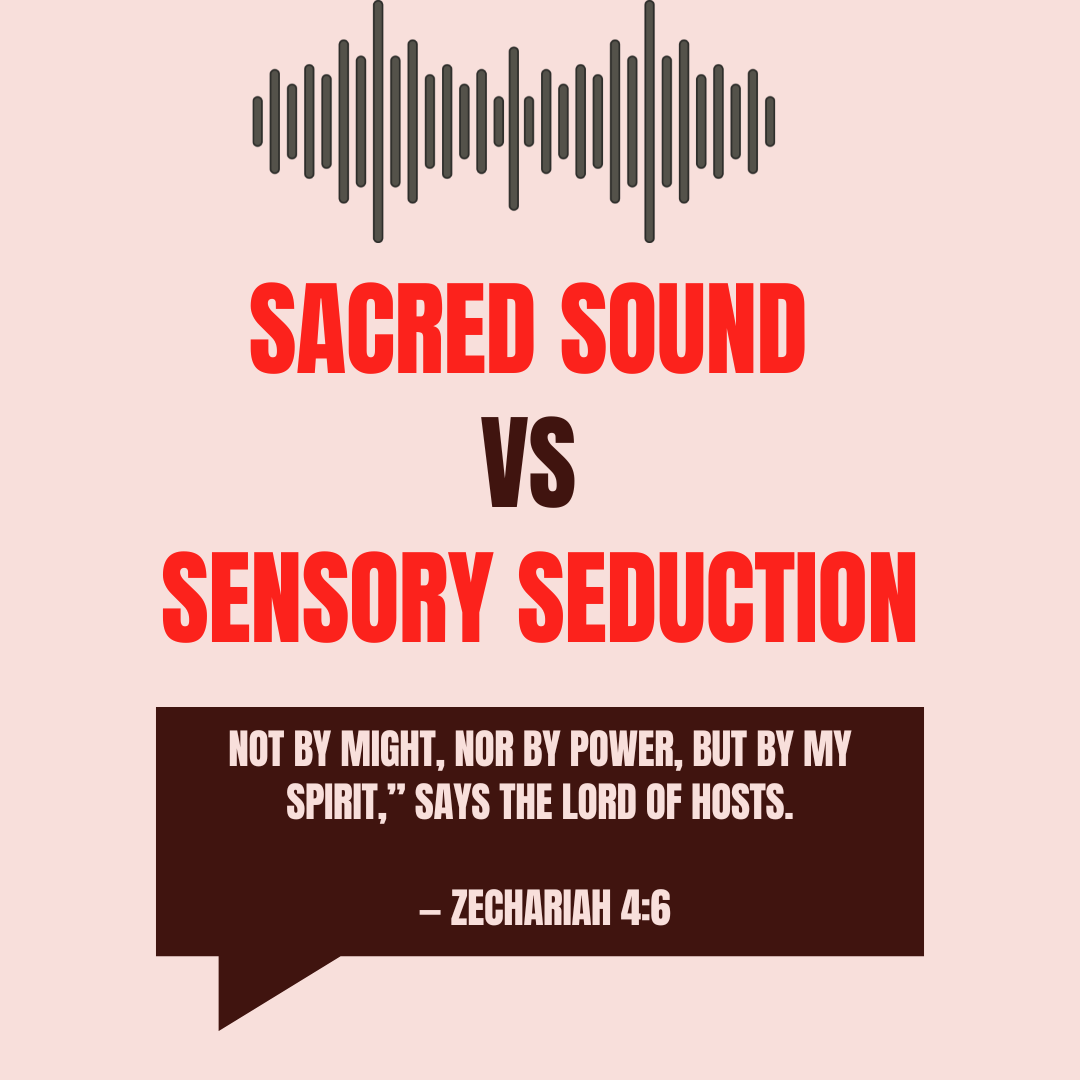
What if the sound that calms your nerves is quietly dulling your discernment?
We live in a culture intoxicated with experience where peace is pursued through sensation, healing through vibration, and spirituality through technique. Sound baths, frequency therapies, and sensory rituals promise alignment, awakening, and inner harmony. They feel soothing. They feel spiritual. But feeling spiritual is not the same as being led by the Spirit.
From Genesis to Revelation, sound is never neutral. God’s voice creates, commands, convicts, and converts. Yet today, many believers are being drawn toward practices that elevate sound itself as a source of power—detached from repentance, obedience, or submission to Christ. Could it be that what we call “healing” is sometimes just numbing? Could what we label “worship” actually be self-soothing? And could our hunger for peace be quietly replacing our need for truth?
As a student of Scripture, I’ve watched sincere Christians drift not into open rebellion, but into subtle substitution. They are not rejecting God; they are replacing Him with experiences that promise rest without the cross, peace without repentance, and spirituality without lordship.
So we must ask hard questions:
Who is the source of the sound you trust?
Does it lead you to repentance or merely relaxation?
Does it sharpen discernment or silence conviction?
Is your soul being formed by the Word of God, or by waves and frequencies that never call you to obey?
The Bible warns us that not every spiritual experience is sacred, not every calming practice is holy, and not every sound that feels peaceful comes from heaven. Discernment is not fear; it is faithfulness. And in an age of sensory seduction, the Church must learn again how to hear—not what soothes us, but what saves us.
Let us listen carefully. Eternity depends on it.
Sound and Direction
Sound testifies throughout Scripture, not as an accident of creation but as an intentional instrument of God’s design. God’s voice carries authority, calling worlds into existence, speaking promises, directing His people, and making known His presence. “And God said…” begins Genesis 1, establishing that sound is not merely matter in motion but a instrument of divine revelation. Faith itself is birthed in hearing, as scripture explains, “So then faith comes by hearing, and hearing by the word of God” (Romans 10:17).
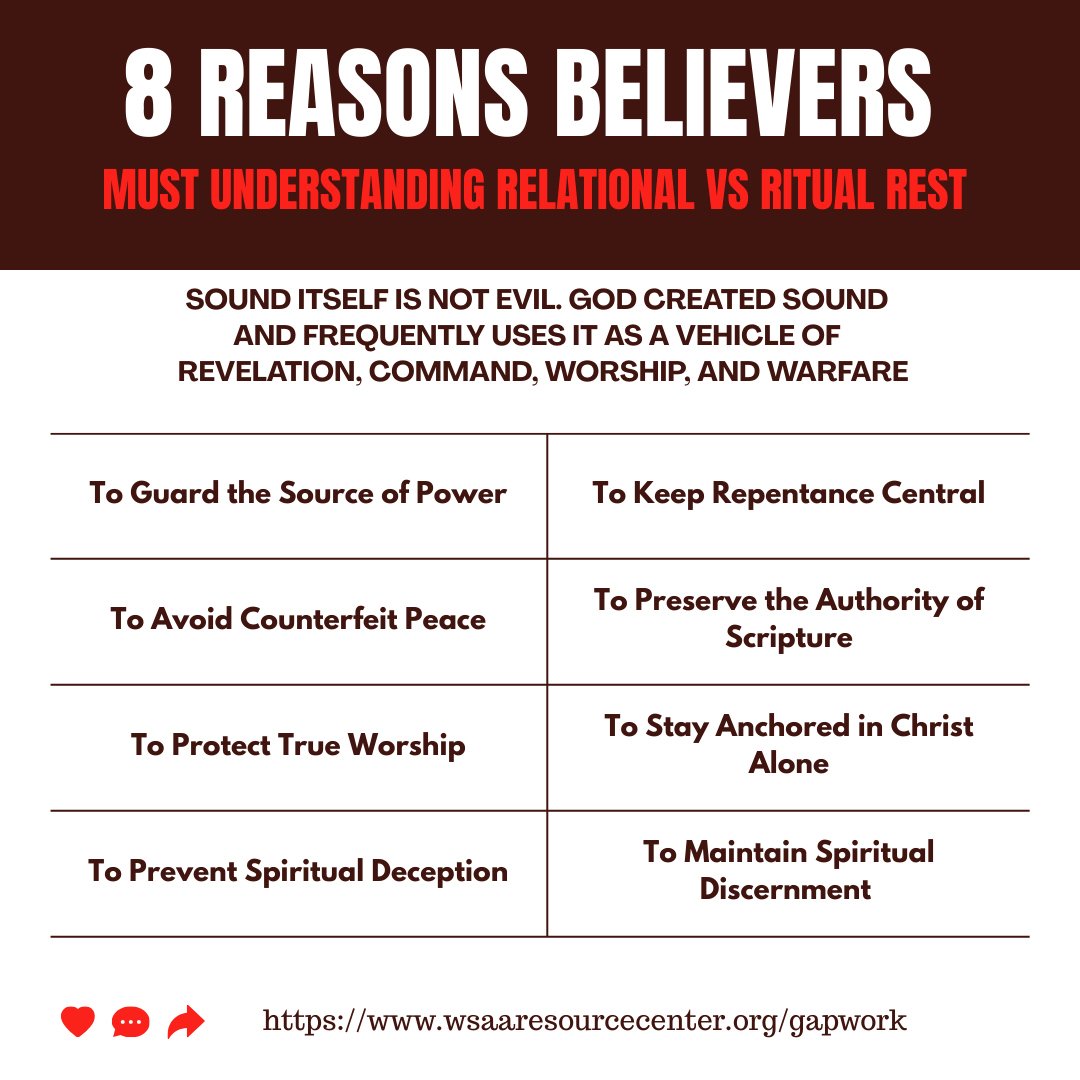
Sound in Scripture is directional, it flows from God to humanity, not from human attempts to summon spiritual influence through frequencies, vibrations, or bowls. Worship, preaching, trumpet blasts, and the still small voice of the Lord all testify that God is both the source and authority of every sacred sound. Yet, in our modern culture, practices like sound baths and vibrational therapy propose that sound alone can heal, align, or awaken the soul.
How can we distinguish between God’s ordained sound and inordinate spiritual forces? When does sensory stimulation masquerade as spiritual transformation? Can God’s people rely on technique, or must we submit to truth? And what is the spiritual cost of pursuing sensation apart from the Spirit?
God’s Sound and Sovereignty
Sound in Scripture is relating to or often characterized by Human revelation. God speaks, and creation obeys. The power of His word is not incidental; it is authoritative. The Red Sea parts, walls fall, and demons flee, all in response to the voice or name of the Almighty, not the pitch of a gong or the vibration of a bowl. Psalm 29 declares, “The voice of the LORD is powerful; the voice of the LORD is full of majesty,” underscoring that God’s sound communicates command and covenant. When God speaks, transformation follows, hearts repent, souls awaken, and lives redirect toward holiness. This is sound in its highest and holiest form a call to obedience rather than an agent to altered consciousness. Biblical sound demands hearing with discernment, listening with intention, and responding with faith. It is never neutral. It is never an end in itself.
God’s ordained sounds are abundant in variety. The Word preached, as in Nehemiah 8:8, brings understanding. Worship, as Psalm 150 illustrates, stirs praise and glorifies God. Trumpets mark both warning and victory in Joshua 6 and Numbers 10. Even the still small voice in 1 Kings 19:12 beckons to the heart quietly yet unmistakably. In every instance, the source is God, the authority is God, and the aim is God. Obedience, repentance, and faith are the fruit of listening.
The Lure of Sound Baths
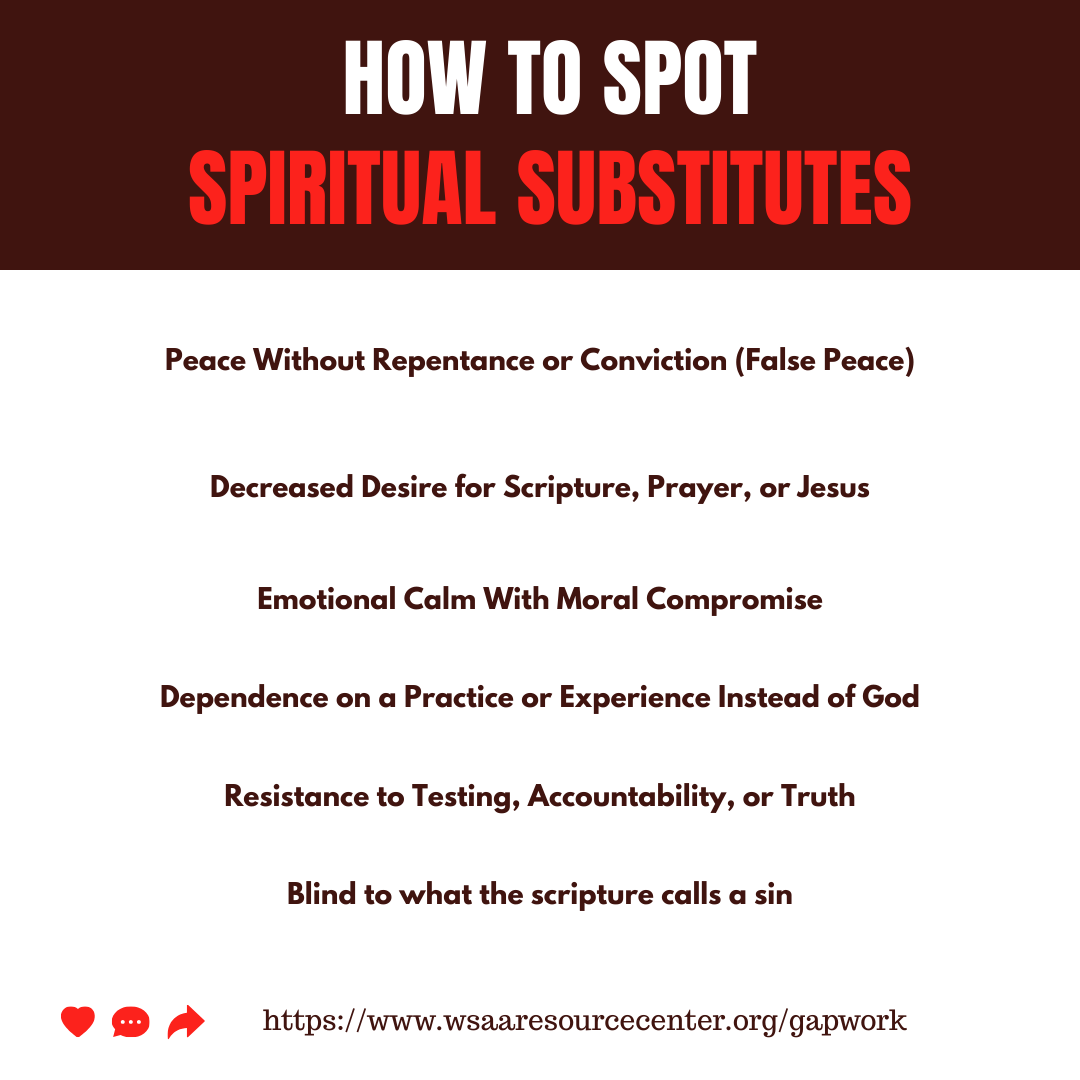
Modern sound baths promise inner harmony, spiritual awakening, and personal alignment through tones, gongs, and vibrations. Yet the problem lies not just in the sound itself but in the theology it implies. These practices assert that sound carries inherent power to heal, elevate, or transform apart from God, prayer, or the Word. This belief is unbiblical. Psalm 107:20 clarifies, “He sent His word, and healed them,” emphasizing that divine healing is relational and rooted in truth, not in frequency. Sound baths replace God’s authority with human technique, suggesting that one can access peace without repentance, surrender, or submission to Christ. In doing so, they invite self-salvation.
Sound baths operate as modern divination. Many originate from Eastern mysticism, chakra systems, or spiritual cosmologies that deny Christ’s lordship. Scripture warns, “Test the spirits to see whether they are from God” (1 John 4:1) and forbids those who “practice divination or sorcery” (Deuteronomy 18:10–12). When humans attempt to manipulate sound as a tool of transformation, they shift trust from the Holy Spirit to energy, technique, or sensation. Unlike biblical sound, which confronts sin, provokes repentance, and summons obedience, sound baths soothe without conviction, entertain without accountability, and manipulate without authority.
What’s the Difference: Source, Spirit, and Submission
The critical distinction between biblical sound and sound bath sound is source. God’s power flows through obedience, repentance, and faith. “Not by might, nor by power, but by My Spirit, says the Lord” (Zechariah 4:6). Sound itself is merely the medium; the Spirit is the mover. Sound baths invert this order: vibration becomes the power, technique becomes the authority, and transformation is sought without the Spirit. In Scripture, sound never replaces God; it points to Him. When divorced from truth and Christ, it becomes counterfeit. 1 Corinthians 4:20 reminds us, “For the kingdom of God is not in word only, but in power,” and that power belongs solely to God.
Motion Misunderstood
Closely linked to sound baths is what some describe as “traveling motion,” the use of swaying, rocking, or repetitive movement to enter altered spiritual states. While Scripture does portray expressive worship; David danced before the LORD (2 Samuel 6:14), people clapped or raised their hands, such motion is response, not a method to manipulate divine power. God requires alertness, understanding, and discernment, not dissociation. Paul emphasizes, “I will pray with the spirit, and I will pray with the understanding also” (1 Corinthians 14:15). Repetitive, trance inducing techniques mirror pagan ritual and rely on sensation, not truth. Matthew 6:7 warns against “vain repetitions,” demonstrating that repetition without meaning or submission is futile and potentially deceptive. God flows through through Holy Spirit and obedience.
Traveling motion practices often bypass the mind, diminish discernment, and open the soul apart from truth. They may produce temporary emotional release, but unlike biblical sound, they do not sanctify. The distinction is severe: God’s movement is Spirit-led, truth-anchored, and holiness-producing, while human-induced motion is sensation-led, technique-anchored, and self-focused.
Experience vs Eternal Elevation
Sound baths bring relaxation, emotional release, and self-regulation without the cross leading to worshiping an idol that exalts experience rather than worship that exalts God and who He created you to be in Him. Worship brings conviction, repentance, and alignment with divine will leading to a peace that passeth all understanding (Philippians 4:7). True worship submits to God’s sovereignty; it is a response to revelation, not a pursuit of sensation. Psalm 150 is not a recipe for emotional states but a call to praise that acknowledges God’s power, presence, and authority. When we substitute bowls and gongs for the Word, we risk transforming worship into self-indulgence.
Healing and Holiness
Jesus healed by authority, not frequency. Demons fled at His spoken word, not a resonant tone. Peace comes from the Prince of Peace, not sonic impressions. In Him, “we live and move and have our being” (Acts 17:28). Healing, transformation, and alignment are relational and spiritual, not mechanical. Sound is a vessel, not a source; the Word is the weapon, not the instrument. Vibrations cannot forgive sin, calm conscience, or reconcile souls. Only Christ, through the Holy Spirit and His Word, can accomplish true transformation.
Biblical patterns of sound and movement consistently point to God, obedience, and transformation. David danced, the Levites blew trumpets, the prophets proclaimed, the psalmists sang; all in recognition of God’s authority. Humans responded to God; they did not induce His presence. The fruit of these encounters was holiness, conviction, and worship, not relaxation or sensory pleasure.
Submission, Sound and Sanctification
Sound is God’s creation, and the Word is His power. The Spirit is His presence. Sound divorced from truth, Christ, and submission becomes counterfeit. Healing comes through the Word, not vibration. Peace comes through the Prince, not pitch. Transformation comes through repentance, obedience, and faith, not technique. Sound baths and traveling motion may soothe or entertain, but they do not sanctify or save.
The questions remain for the discerning believer: Will we seek God in His sound or settle for human counterfeits? Will we trust the Word or worship the wave? Can our hearts recognize the difference between obedience-driven transformation and sensation-driven escape? And finally, will we allow the Holy Spirit to lead us in worship, or will we chase techniques that promise power apart from God?
“For the kingdom of God is not in word only, but in power” (1 Corinthians 4:20). The power belongs to God alone. The sound of heaven is not a frequency; it is a voice that calls, convicts, and converts. When we listen, submit, and respond, we join a symphony that echoes through eternity; God’s sovereign, sanctifying sound.