A Winter & A Warning
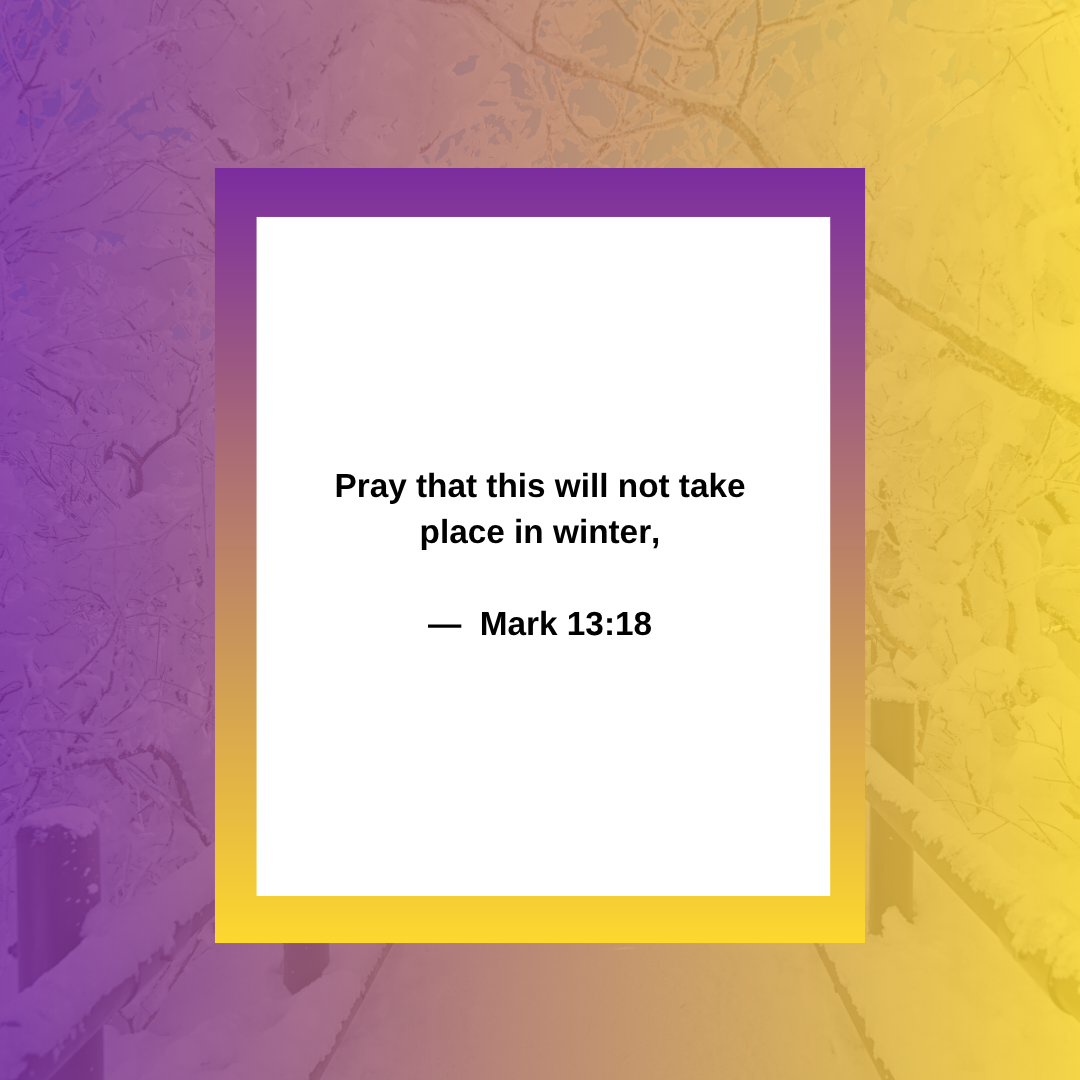
17 How dreadful it will be in those days for pregnant women and nursing mothers! 18 Pray that this will not take place in winter, -Mark 13:17-18
Imagine a city trembling beneath the thunder of war. Then, in the middle of this mounting misery, Jesus speaks a startling sentence that sounds less like a distant prophecy and more like a headline from humanity's darkest hour, "How dreadful it will be in those days for pregnant women and nursing mothers! Pray that this will not take place in winter." Mark 13:17-18. Why would Jesus specifically mention pregnant women and nursing mothers? Why would He tell His followers to pray about the season in which disaster might arrive? And what does this warning mean for people who are trying to understand prophecy, persecution and the coming pressures of a troubled world? These are not casual questions. They cut into the heart of Mark 13, a chapter filled with warnings about deception, destruction, persecution, endurance and the ultimate unveiling of God's purposes.
Mark the Messenger
Mark, traditionally identified with John Mark, appears in the New Testament as a companion connected with Paul, Barnabas, and Peter. Acts identifies him as the son of a woman named Mary whose house became a gathering place for believers in Jerusalem. Early church tradition notes that John Mark compiled the account based heavily on the firsthand eyewitness memories and public preaching of the apostle Peter. The Book of Mark is fast-moving, vivid, and urgent, repeatedly carrying the reader from one dramatic scene to another. The writings focus heavily on what Jesus did, emphasizing His actions, authority, and path to the cross rather than a lengthy inner monologue or a detailed personal reflection from Mark himself. Mark writes with the heartbeat of a storyteller, but beneath the action lies a serious call to faithfulness.
In Mark 13 Jesus delivers this prophetic teaching on the Mount of Olives. The chapter begins with the disciples admiring the magnificence of the Jerusalem temple, yet Jesus shocks them by declaring that the stones will not remain standing upon one another. The conversation then turns from impressive architecture to impending adversity, from temples to trouble, from stones to suffering, and from earthly security to eternal vigilance. Jesus warns about false messiahs, wars, earthquakes, famines, persecution, betrayal, and profound distress. Mark 13:17-18 belongs inside that larger storm warning. These words are not isolated from the surrounding prophecy. They are part of Jesus' compassionate preparation for people who may one day find themselves caught inside circumstances they never imagined possible.
In the Midst of Misery
Jesus says, "How dreadful it will be in those days for pregnant women and nursing mothers!" At first glance, this may sound like a simple observation about physical hardship, but the statement reaches much deeper. Pregnancy already places extraordinary demands upon the body. Nursing mothers carry the additional responsibility of protecting and feeding infants who cannot protect themselves. In an emergency involving war, famine, forced flight, persecution, or social collapse, vulnerability increases dramatically. A pregnant woman cannot simply abandon her physical needs, and a nursing mother cannot simply leave her child behind. Jesus is therefore drawing attention to those who may experience crisis with particular difficulty.
The picture is painfully human. Imagine a storm so fierce that healthy adults struggle to escape. Now imagine trying to flee while carrying an infant. Imagine roads filled with frightened people, supplies disappearing, homes becoming unsafe, and ordinary systems collapsing. The journey becomes heavier because another life depends entirely upon you. That is the emotional force behind Jesus' warning. The passage reminds us that prophetic crisis is not merely about dates, diagrams, kingdoms, and headlines. It is about people. It is about mothers, children, families, and human beings caught inside circumstances far larger than themselves. Jesus does not describe disaster with cold detachment. His words reveal compassion because He recognizes that suffering does not affect everyone equally.
Winter Winds
Then Jesus adds another instruction, "Pray that this will not take place in winter." Why winter? In Bible times, winter could make travel more difficult. Cold weather, rain, muddy roads, swollen streams, and limited food supplies could turn an already dangerous journey into an even more desperate ordeal. Jesus is not suggesting that winter itself possesses some mystical power. Rather, He recognizes that timing can intensify suffering. A person may survive a difficult mountain climb during mild weather, but the same climb during a blizzard can become deadly. The mountain has not changed, but the conditions have. In the same way, a crisis occurring under harsh conditions can become far more severe. The warning is therefore both prophetic and practical. Jesus understands human weakness, environmental hardship, and the reality that circumstances can compound suffering.
The Powerful Word
Perhaps the most striking word in verse 18 is not winter, it is pray. Jesus does not tell His disciples merely to calculate. He does not tell them merely to speculate. He does not tell them merely to stare at signs. He tells them to pray. That matters enormously. Prophecy should never become an excuse for spiritual passivity. Biblical prophecy repeatedly calls God's people toward alertness, endurance, faithfulness, and prayer. The command to pray reveals that the proper response to frightening possibilities is not panic but dependence upon God.
This is where Mark 13 moves from prediction to preparation. The believer is called to pray instead of panic, to prepare without pretending to control everything, and to protect the vulnerable when suffering comes. Fear can make people frantic, but prayer redirects fear toward God. Jesus' mention of pregnant women and nursing mothers also reminds believers that compassion must remain central when society becomes unstable.
Pain Before Promise
Mark 13 is not simply a chapter of catastrophe. It is a chapter of preparation. Jesus speaks about terrifying events, but He does so because He wants His followers to understand that suffering does not mean God has abandoned His people. Throughout Scripture, difficult seasons often appear before deliverance. Israel experienced bondage before the Exodus. David experienced wilderness before the throne. The disciples experienced the cross before the resurrection. The early church experienced persecution while continuing to proclaim the gospel. The biblical pattern repeatedly reminds us that darkness does not get the final word.
That is why Mark 13 should never be reduced to sensational speculation. It is not merely a prophetic puzzle waiting to be decoded. It is a spiritual summons. Jesus calls His followers to watch, pray, endure and remain faithful. The believer does not need to know everything about tomorrow in order to remain faithful today. That may be one of the deepest lessons in these verses.
Prophetic Date Chasing
There is also a serious danger in becoming obsessed with prophetic date chasing. When people become fascinated with prophecy, they can become consumed with identifying exact dates, political figures, nations, wars, and supposed prophetic codes. Yet Jesus' emphasis repeatedly moves beyond curiosity toward character. Watch. Pray. Endure. Remain faithful. Those commands are more important than sensational predictions. The Truth of biblical prophecy is not simply to satisfy curiosity about tomorrow. It is to transform how God's people live today.
When the World Feels Like Winter
Our modern world can sometimes feel like a symbolic winter. Wars rage, families flee, nations tremble, economic pressures rise, natural disasters strike, false voices compete for attention, and fear spreads rapidly through television screens and social media feeds. Yet Christians should resist the temptation to turn every crisis into a prophetic countdown. Instead, Mark 13 calls for sober spiritual alertness. The question is not merely, "Can I identify the prophecy?" The deeper question is, "Am I prepared to remain faithful?"
Jesus' warning about pregnant women and nursing mothers brings prophecy down from the clouds and places it directly onto the human heart. It reminds us that behind every headline are people with names, families, fears, hopes, and fragile lives. Prophecy without compassion can become spectacle. Prophecy joined with compassion becomes a call to faithful action.
Courage, Compassion & the Call to Care
This is why the church should read Mark 13 with both courage and compassion. If difficult days come, believers should not become cruel commentators watching suffering from a distance. They should become compassionate servants. They should help the vulnerable, strengthen frightened families, feed the hungry, shelter those in danger when possible, pray for peace, remain prepared for persecution, and proclaim Christ without surrendering to panic.
The warning concerning pregnant women and nursing mothers should awaken something deeper than curiosity. It should awaken compassion. If Jesus noticed the particular vulnerability of mothers and infants in a coming crisis, His followers should also learn to notice the vulnerable around them. Faith is not merely what a person believes about prophecy. Faith is also what a person does when suffering appears at the doorstep.
Faith in the Fierce Winter
Mark 13:17-18 is a warning wrapped in compassion. Jesus sees the coming storm and thinks about mothers. He sees the danger and remembers children. He sees the winter and commands prayer. That is significant. The Lord who speaks about kingdoms also notices the vulnerable. The Savior who speaks about catastrophic events also speaks tenderly about human suffering.
The final picture is therefore both sobering and hopeful. When the world enters its darkest winter, God's people are called to remain watchful, prayerful, faithful, and compassionate. The storm may be fierce. The winter may be bitter. The road may be difficult. Yet the command remains clear, pray. When tomorrow becomes frightening, faithfulness today becomes priceless. And when the world grows cold, the people of God are called to keep the fire of faith, hope, mercy and obedience burning brightly.