Standards in the Storm
There are moments when time feels soaked in steadfast conflict. When Truth seems to trip in the streets. When Justice seems jammed at the gates. When Peace feels postponed. Isaiah saw such a season. He named the ache. He traced the trouble. The Lord’s hand was not shortened. His ear was not heavy. The distance was not divine absence but human rebellion. Sin severed communion. Iniquity interrupted intimacy.
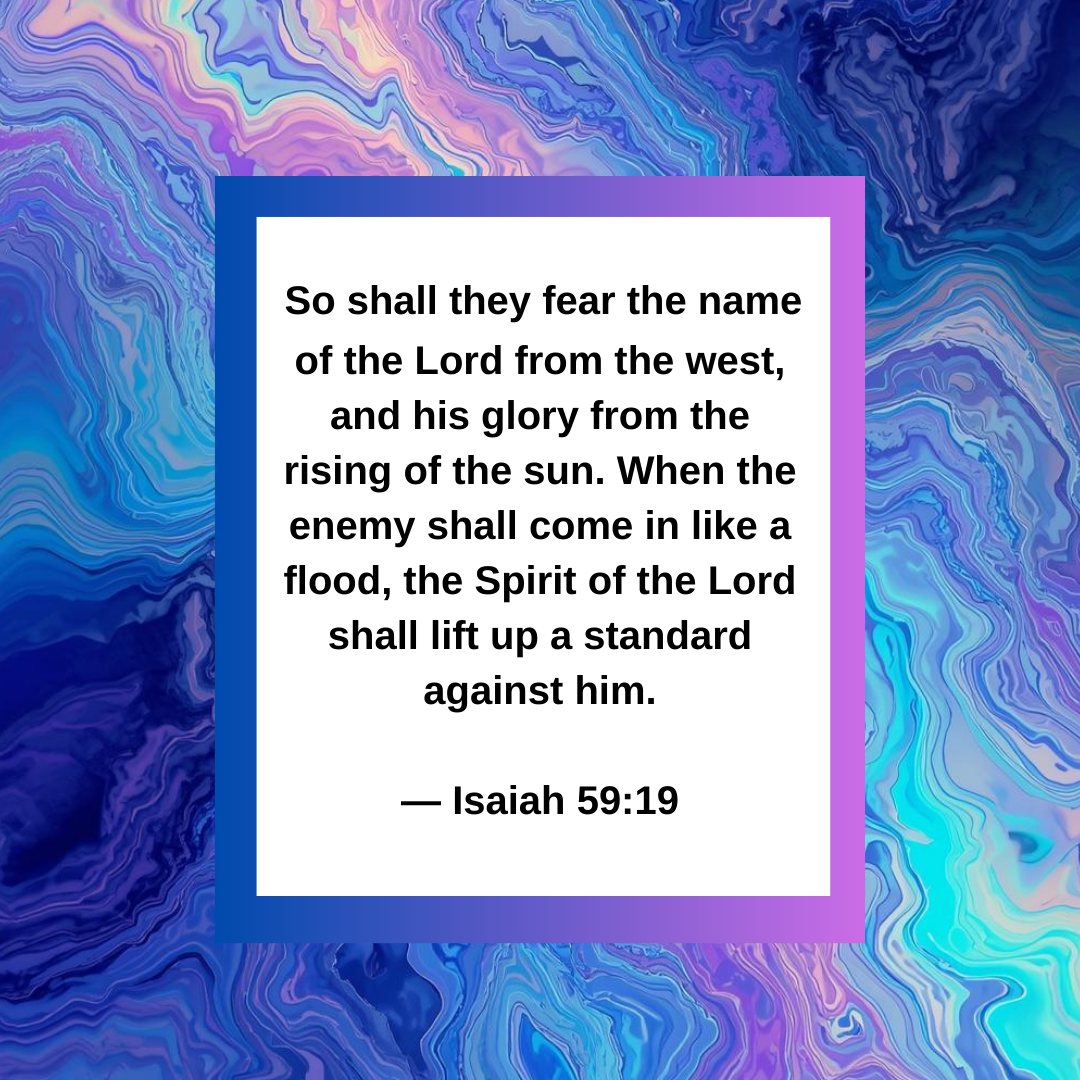
Isaiah 59 speaks plainly. Violence multiplied. Deceit dominated. Righteousness that refused to retreat and resisted were ridiculed. Isaiah addresses a spiritual and moral crisis within Israel and explains why God’s blessings and peace seemed distant from the people. The chapter opens by correcting a dangerous assumption; the problem was not God’s weakness or unwillingness to save. Isaiah declares that the Lord’s hand is not too short to deliver, nor His ear too dull to hear. Instead, the barrier was the people’s sin. Their iniquities had created a separation between them and God, disrupting fellowship and blocking the flow of justice and peace.
Isaiah then lists specific sins that characterized the nation. These were not merely private failures but systemic issues, violence, deceit, injustice, and bloodshed. Truth had collapsed in the streets, righteousness stood far away, and those who tried to live uprightly became targets. Isaiah paints a picture of a society where moral order had broken down, and everyone suffered as a result.
At this point, the chapter turns dramatically. God looks and sees that there is no justice and no human intercessor capable of restoring what is broken. This absence moves Him to act personally. The Lord arms Himself with righteousness like armor and salvation like a helmet, imagery that shows God stepping into history as a divine warrior, El Elyon.
WONDER WORKING POWER
When there was no one to help God helped Himself. He clothed Himself with righteousness. He crowned Himself with salvation. The imagery thunders. The Lord entered history as a warrior for His wounded people. Judgment would be just. Mercy would be mighty. Deliverance would be divine.
This is where the promise breaks through the clouds. From west to east God’s name would be revered. From sunset to sunrise His glory would be seen. This is not a local revival. It is global recognition. Not fleeting emotion but enduring awe. The fear of the Lord returns when His weighty presence is revealed.
Then the line that steadies shaking hearts. When the enemy comes like a flood the Spirit of the Lord raises a standard. Not if. When. Opposition is assumed. Victory is assured.
A standard was a signal. A banner. A declaration of rule. It rallied the weary. It marked territory. It announced who commanded the field. The Spirit does not panic. He proclaims. He lifts the banner over God’s people and against their oppressor. The flood does not decide the future. The Spirit does.
The Redeemer Who Reaches Zion
Isaiah 59: 19 proves that redemption is not theory. Redemption arrives. Redemption walks streets. Redemption meets repentant hearts. The invitation of redemption is to turn from transgression to change direction. As we celebrate the birth of Jesus, it is a reminder that His was not a quiet footnote in history; it was a collision. Heaven did not merely observe earth from a distance; Heaven it broke in. When Christ was born, eternity entered time, the invisible became visible, and the divine stepped into human frailty.
What appeared to be a humble moment in Bethlehem was, in truth, a universal confrontation where God raised His standard against darkness once and for all. This moment was a direct fulfillment of God raising a standard. A standard is a banner lifted in battle to declare authority and victory. In Bethlehem, God did not just raise a torch; He raised His Son, the Living Word. The enemy expected power to come through force, but God countered with humility.
The Flood that Met It’s Limit
The standard God lifted was not fear, but hope. Not domination, but redemption. A star split the night. Shepherds were summoned. Outsiders were welcomed. Seekers were guided. Every sign preached the same sermon. God had come to reclaim what was broken.
In Christ the flood met its limit. Separation met its Savior. Shame met its Substitute. Death met its defeat. This was not a visit. It was an invasion of grace. And we see that Isaiah’s promise did not linger in ink. It leapt into flesh. Bethlehem was the collision point. Heaven did not hover. It descended. Eternity entered time. The Word became flesh and pitched His tent among us.
This was God raising His standard in the most unexpected way. No sword. No chariot. A child. Wrapped. Worshiped. Jesus Christ’s very presence declared that the kingdom of God had arrived and that darkness would no longer advance unchecked.
From the Manger to the Mission
The standard raised in Bethlehem stayed raised at Calvary and blazed at the empty tomb. Jesus lived the banner. He bore our burden. He broke our bondage. He rose in glory. Now the covenant continues. The Holy Spirit remains. The Living Word abides. The witness advances.
If God is for us who can be against us. We are not overcome but commissioned. Not drowned but deployed. We carry the testimony. We lift the truth. We stand beneath the banner and beckon others home. Do not measure the waters. Fix your eyes on the standard. Do not count the waves. Cling to the Word. The flood is real. The Spirit is greater.
Turn again if you have wandered. Speak again if you have grown silent. Stand again if you have grown weary. From west to east His glory rises. From generation to generation His covenant holds. From Bethlehem to today the banner still flies. Lift your eyes. Live redeemed. Walk sent. The flood may rise. But the standard stands.