A Seat at the Master’s Table
Priorities & Presence
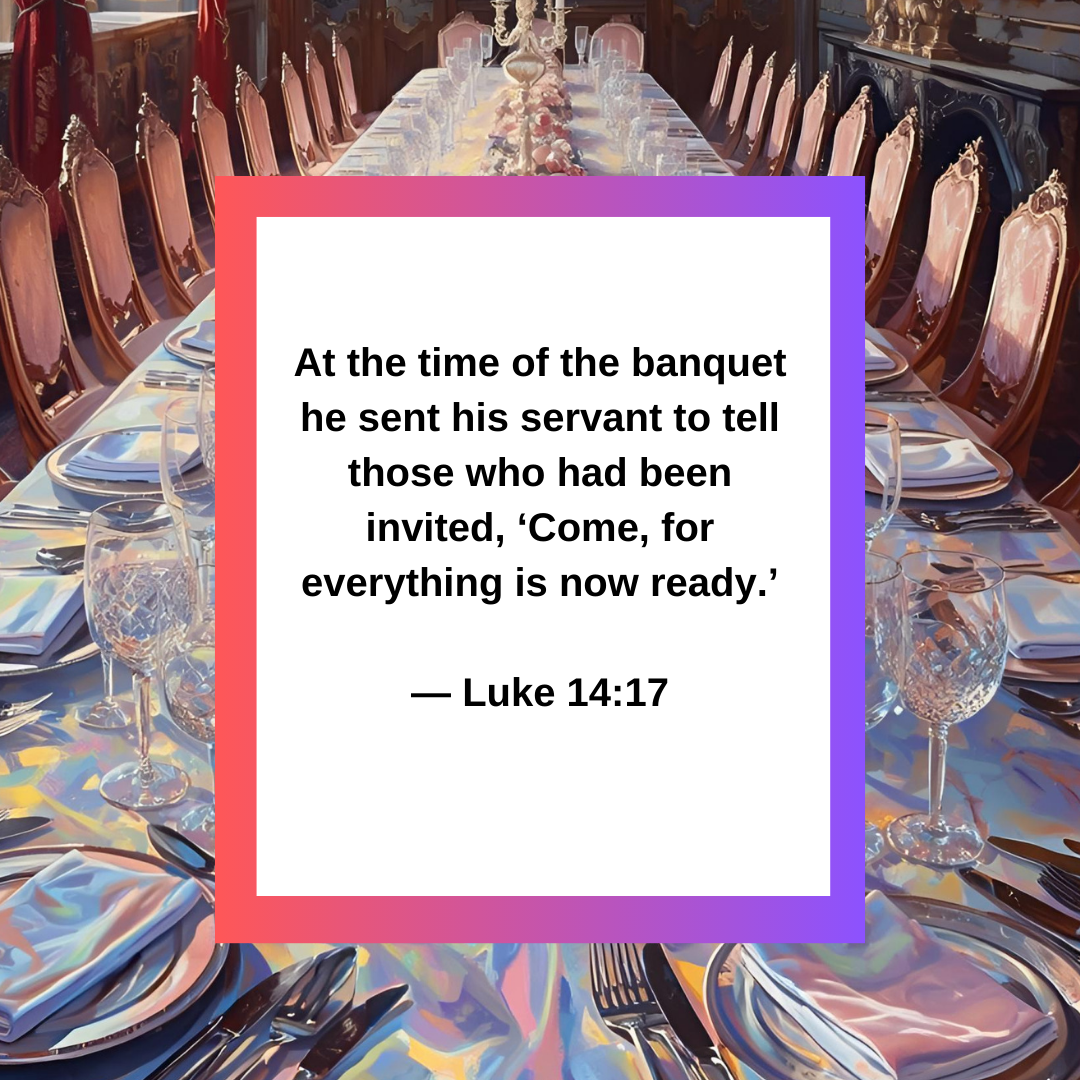
The parable of the great banquet, as recorded in Luke 14:15–24, is one of Jesus’ most vivid teachings about the kingdom of God. The parable of the great banquet challenges us in ways that go beyond a simple story. It invites us to pause and reflect on what really matters in our lives and how we respond to God’s call. It reminds us that the greatest treasures in life are in the eternal, transformative presence of God. The parable of the great banquet, as recorded in Luke 14:15–24, is one of Jesus’ most vivid teachings about the kingdom of God. At first glance, it reads like a simple story about a man hosting a feast, yet beneath the surface, it is a profound reflection on human priorities, divine patience, and the radical inclusivity of God’s grace. The narrative begins with a seemingly innocuous comment from a guest who proclaims, “Blessed is the one who will eat at the feast in the kingdom of God.” This statement, both hopeful and aspirational, sets the stage for Jesus’ story. The kingdom of God is likened to a banquet, a celebration of abundance and joy, yet access is not automatic. It is an invitation, deliberate and intentional, calling for response, commitment, and surrender.
The story starts in a surprisingly ordinary way, a man is getting ready for a big feast and sends his servant out to invite everyone. The feast is ready, the tables are set, and the anticipation of shared joy should fill every corner of the household. Yet the response of those invited reveals the human heart in tension with divine desire. One by one, the invitees offer excuses. The first claims he must inspect a newly purchased field, prioritizing material investment over spiritual invitation. Another mentions the acquisition of oxen, obligations tied to economic enterprise that distract from eternal opportunity. A third cites the joy of recent marriage, personal celebration eclipsing communal celebration in God’s house. Their refusals are not inherently sinful, yet they reflect a disordered attachment to temporal concerns at the expense of eternal blessing. Here Jesus exposes a timeless truth: the allure of the world can subtly seduce hearts away from the sacred call.
The master’s response to rejection is both instructive and unsettling. Anger rises, not as petty vengeance but as righteous indignation at the dismissal of generosity. The servant is commanded to go beyond the original circle of invitees, to seek the marginalized, the overlooked, the broken, and the humble. The poor, the crippled, the blind, and the lame are brought in, illustrating God’s preference for the humble and the hurting over the self-sufficient and the self-absorbed. The parable challenges conventional wisdom and social hierarchies by demonstrating that God’s kingdom reverses human expectations. The excluded are welcomed, and the initially invited are excluded. Spiritual blessing is not earned by status, wealth, or social standing but by responsiveness to God’s call and openness to His grace.
Radical Inclusivity
The parable deepens as the servant reports back, noting that there is still room. The master commands further outreach, compelling those in the roads and country lanes to come in. This extension signifies the expansive nature of God’s kingdom and the urgency of divine invitation. There is an insistence that no place remain empty, that the house be full. The imagery communicates abundance without limit, a feast without scarcity, and the joy of shared participation. The kingdom is not a closed society but an open table, a gathering of all who will respond to the call. Jesus’ words underscore that delay, indifference, or pride will result in exclusion, for the invitation requires action. Spiritual passivity carries consequences. Blessings are offered freely, yet they demand engagement, awareness, and priority.
How often do fields, oxen, or celebrations keep us from responding to God’s invitation? How often do convenience, comfort, or routine blind us to divine opportunity? Spiritual attention requires sacrifice, a willingness to reorder priorities, and a readiness to step into the feast God prepares. The banquet symbolizes the fullness of life in Christ, the joy of communion with God and with others, and the ultimate satisfaction of being part of God’s redemptive plan. Every excuse deferred delays blessing, and every hesitation risks missing the fullness of God’s offer.
The parable affirms God’s radical inclusivity. Those initially overlooked, the socially marginalized, are the very ones invited to partake in the feast. This divine strategy subverts human judgment and calls believers to embrace the marginalized, the hurting, and the outcast. The kingdom of God operates on principles of grace, not merit, and it prioritizes the spiritually receptive over the socially esteemed. Jesus’ story challenges followers to align with this perspective, to extend invitation, hospitality, and mercy in their own communities, reflecting the master’s heart in the narrative.
The Urgency and Inevitability of God’s Invitation
The insistence on filling the house communicates the urgency and inevitability of God’s invitation. The command to compel those in the streets and country lanes signals that God’s love pursues the unreachable, touches the neglected, and insists upon fullness. The imagery of compelling participation does not negate human free will but emphasizes the relentless generosity and perseverance of God. He will leave no place empty, no heart unaddressed, and no life without opportunity to respond. For modern believers, this serves as both comfort and challenge, the God who calls relentlessly is the same God who calls personally, intimately, and persistently.
The final verse delivers a sobering warning. “Not one of those who were invited will get a taste of my banquet.” The master’s words underscore the consequences of rejection. Spiritual opportunity is precious, fleeting, and accountable. God’s blessings are not automatically bestowed but contingent upon engagement, obedience, and the alignment of heart and will. The parable encourages introspection, asking each listener to consider their readiness to respond, their attentiveness to divine direction, and their willingness to prioritize the eternal over the temporal. Faith is active, responsive, and relational. Passivity results in absence from the banquet, while intentional pursuit leads to participation in the joy of God’s kingdom.

A Call to Intentional Discipleship
The story naturally brings up some important lessons for our everyday lives. It makes us think about what really matters, how we handle distractions, and how attentive we are to our spiritual growth. When we find ourselves putting off our faith, hesitant to serve, or getting caught up in worldly concerns, the parable invites us to take a step back and reevaluate our priorities. Personal ambition, material gain, or social celebrations aren’t wrong on their own, but they shouldn’t take the place of the daily invitation God offers. The story acts like a mirror, asking us, what excuses are keeping us from fully engaging with God? And what changes in our priorities would help us live more in line with the kingdom?
The story also encourages a posture of inclusivity and service. The master’s outreach to the marginalized models the kingdom’s ethics. Believers are prompted to reflect God’s heart in their communities, to welcome the overlooked, to offer generosity without prejudice, and to value individuals based on spiritual readiness rather than social esteem. Counseling within church communities often focuses on relationships, social support, and inclusion; this parable provides a biblical foundation for such efforts, reminding us that God delights in the humility and receptivity of those society may disregard. Our ministries, service, and hospitality should mirror this divine pattern.
Spiritually, the parable reassures the faithful that God’s invitation is persistent and abundant. The feast is prepared, the house is ready, and the call reaches into every corner of life. Even when initial invitations are refused, God’s generosity extends beyond human expectation. The parable portrays a God who does not give up, who pursues the humble, and who transforms spaces of exclusion into halls of celebration. For believers facing doubt, isolation, or rejection, this narrative affirms that God’s table is open, and His blessing is within reach. The promise of the feast is a promise of restoration, renewal, and relational depth with God.
The parable of the great banquet is more than a story; it is a mirror of human inclination, a revelation of divine grace, and a call to intentional discipleship. Jesus’ teaching challenges complacency, disrupts worldly priorities, and asserts the value of openness to God’s invitation. It encourages believers to examine excuses, embrace inclusivity, and respond with urgency and faithfulness. The feast symbolizes the fullness of life in Christ, where joy, communion, and blessing converge. Those who accept the invitation experience the depth of divine love, while those who reject it face the sobering consequence of absence. The banquet awaits, the master calls, and the opportunity is present now. How will we respond to the invitation?