The Crowns after Choas
We are living in loud days where power parades and pride preaches. Where truth is trimmed to fit trends and holiness is labeled hostile. Empires no longer roar they rebrand. Beasts no longer bite they persuade. Crowns are offered without crosses and kingdoms without repentance. Yet heaven is still watching history still bending and the Ancient of Days still seated. Waiting to hand the kingdom to the faithful.
Daniel 7 is not written to satisfy curiosity about the future but to stabilize courage in the present. This vision was given to a faithful man living under foreign rule surrounded by pagan power and pressured to compromise. The message is not escape but endurance. Not fear but formation. Heaven pulls back the veil not to terrify the saints but to remind them who truly reigns.
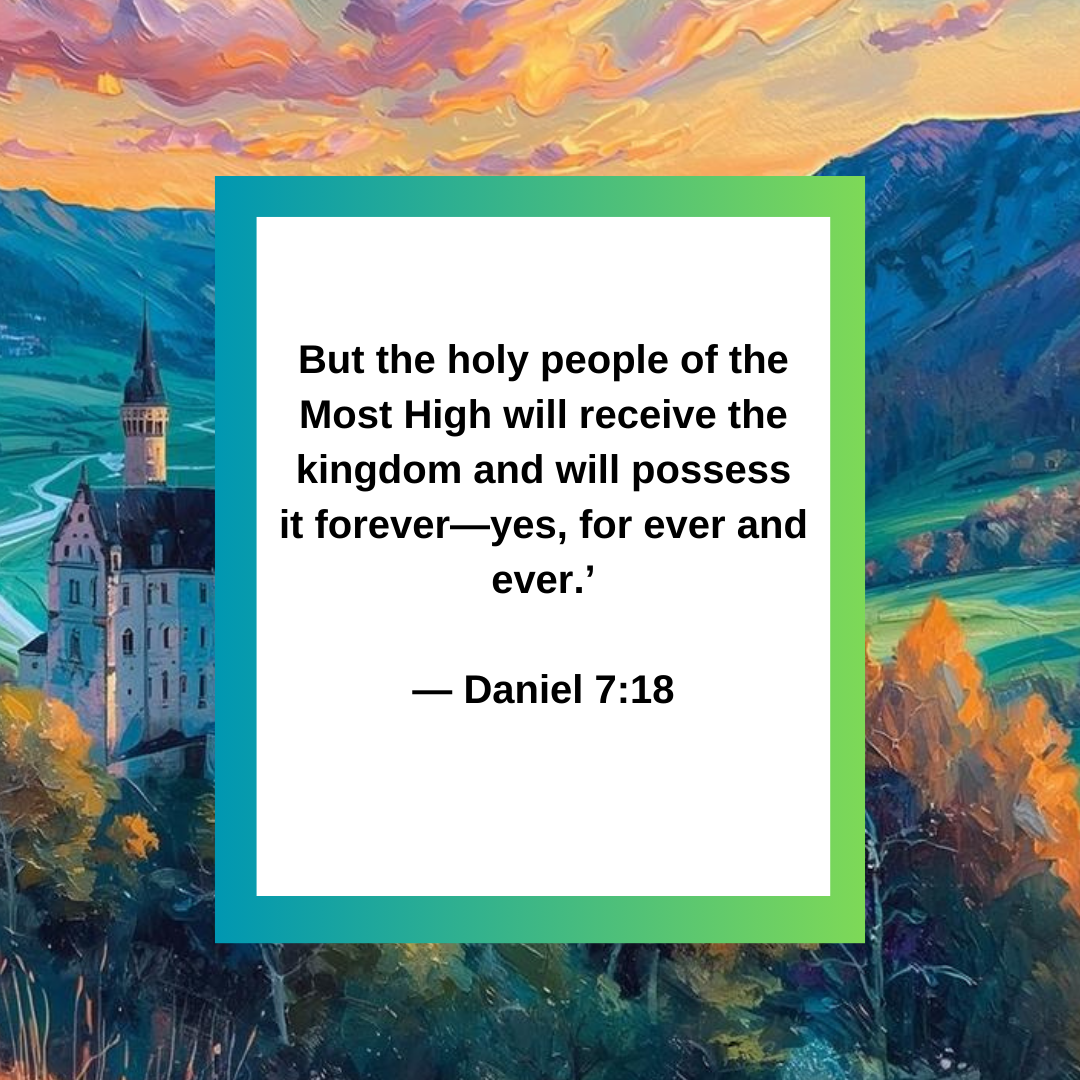
At the center of this passage stands a promise that outlives every empire. The holy people of the Most High will receive the kingdom and will possess it forever yes forever and ever. That sentence is not poetic exaggeration. It is prophetic certainty. Kingdoms rise like waves and fall like foam but the inheritance of the saints is anchored beyond time.
Daniel sees beasts because human empires often become bestial when power is severed from worship. The fourth beast is described as different dreadful devouring and domineering. Iron teeth and bronze claws symbolize strength without mercy. This is power that consumes rather than cultivates. Authority that tramples rather than tends. The text makes clear that this kingdom is global in reach and ruthless in rule. It devours the whole earth crushing what resists and consuming what remains.
Yet Daniel is not merely disturbed by the beast but by the horn that rises among horns. This smaller horn speaks boastfully wages war against the holy people and appears to prevail. Here Scripture confronts one of the most painful realities of faithful living. There are seasons when arrogance seems to triumph and oppression appears to succeed. The saints are not spared conflict. They are not exempt from suffering. They are targeted.
The horn has eyes because it watches. It has a mouth because it boasts. It speaks against the Most High because pride always seeks to dethrone God with language before it attacks with force. Words shape worlds. Decrees define destinies. This horn attempts to change times and laws. It seeks to rewrite rhythms reorder worship and redefine righteousness. This is not merely political pressure but spiritual persecution. The aim is transformation through coercion.
The holy people are delivered into his hands for a time times and half a time.
This phrase echoes throughout Scripture as a symbol of limited suffering. Not endless oppression but measured trial. Not eternal night but appointed testing. Evil is allowed but never autonomous. Darkness operates on a leash.
Then everything changes.
Daniel watches until the Ancient of Days takes His seat. This is courtroom imagery. Thrones are set books are opened judgment begins. The terror of the beast is interrupted by the tranquility of eternity. The power of the horn is not debated or negotiated. It is removed. Completely destroyed. Forever.
The turning point of history is not a battlefield but a bench. The court sits. Heaven does not panic. God does not rush. He reigns. Judgment is pronounced in favor of the holy people. Not because they were strong but because they were faithful. Not because they conquered but because they endured.
The phrase in favor of the holy people is breathtaking. It means the verdict of heaven is already decided. The saints are not fighting for victory. They are standing toward it. The kingdom is not seized by rebellion but received by relationship. Inheritance not insurrection.
Halfway through this vision a question must be asked. Why would God reveal such intense conflict if the outcome is already certain. Because courage grows when destiny is remembered. Because perseverance is fueled by perspective. Because suffering without meaning breaks the soul but suffering with promise builds it.
Did You Know
Daniel 7 is written in Aramaic which was the international language of empire emphasizing the global scope of the vision
The fourth beast is often associated with Rome but also points beyond Rome to a final composite system of rebellion
The phrase Ancient of Days appears only in Daniel and highlights God as timeless ruler over time bound kingdoms
Time times and half a time equals three and a half symbolizing incomplete dominion and limited authority
The saints possessing the kingdom echoes Genesis where humanity was originally commissioned to rule under God
This chapter shifts prophecy from Israel alone to the destiny of all faithful people under God
Jesus later echoes Daniel 7 when He calls Himself the Son of Man before the Sanhedrin
The interpretation given to Daniel leaves no ambiguity.
The fourth beast is a kingdom. The horns are kings. Power structures matter. Leadership shapes culture. Authority influences allegiance. But none of these escape divine oversight. God names them before they arise. He limits them while they rule. He ends them when their purpose is complete.
The little horn is described as different. Evil often presents itself as innovation. It claims progress while producing persecution. It promises order while delivering oppression. It speaks great words while shrinking souls. The attempt to change times and laws is an assault on worship and obedience. Times govern festivals rhythms rest and remembrance. Laws govern ethics justice and truth. To change both is to reshape reality.
The saints are handed over. This is one of the hardest truths in Scripture. Faithfulness does not guarantee ease. Holiness does not ensure safety. The people of God may suffer under the systems of men. Yet handed over does not mean abandoned. It means entrusted. Like Job the saints are tested but not destroyed. Like Joseph they are confined but not forgotten.
Then comes the transfer.
Sovereignty power and greatness are handed over to the holy people of the Most High. This is astonishing. The saints do not merely survive. They reign. They do not merely escape. They inherit. The kingdom under heaven becomes the possession of those once trampled by it.
This is restoration. Humanity was created to rule under God. Sin corrupted authority. Empires exploited it. But redemption redeems dominion. The saints rule not as tyrants but as priests. Not for self but for service. Not for pride but for praise.
All rulers will worship and obey Him.
This is the final harmony of history. Power aligned with worship. Authority submitted to truth. Leadership kneeling before love. The kingdoms of this world become the kingdom of our Lord.
Daniel ends the vision troubled pale and silent. Revelation does not always bring comfort. Sometimes it brings weight. The burden of knowing both the cost and the crown. Daniel keeps the matter in his heart because some truths must mature before they are spoken.
This passage calls the modern church to discernment. Are we surprised by opposition or prepared for it. Do we measure success by influence or faithfulness. Are we shaping culture or being shaped by it. Are we tempted to compromise times and laws to avoid conflict.
The beasts still roar. The horns still boast. Systems still oppress. Words still wound. Yet the Ancient of Days still reigns. The court still sits. The verdict still stands.
The kingdom belongs to the holy people. Forever. Yes forever and ever.
So endure. Remain. Refuse to bow to beasts or bargain with horns. Live as heirs not hostages. Pray as citizens of another country. Worship as those who know the end of the story.
Because history is not a cycle. It is a coronation.