Part III-Spiritual Gifts: Two Paths
Dear friends, do not believe every spirit, but test the spirits to see whether they are from God, because many false prophets have gone out into the world. -1 John 4:1
After recognizing the range of spiritual practices that exist, it becomes important to understand how they compare with God’s design for spiritual life. Many practices seek knowledge, control, or direction through external or internal forces, yet God invites a different path centered on relationship and surrender. The contrast becomes clearer when viewed through Scripture and the life of Christ. God’s Disciplines do not compete with other systems but reveal a different foundation altogether. One is rooted in self or unseen influences, while the other is rooted in communion with God and His truth. This comparison helps bring discernment without confusion or fear. It highlights that not every spiritual path leads to life, even if it appears meaningful at first. Through this understanding, a clearer direction emerges that is anchored in Scripture and the character of God.
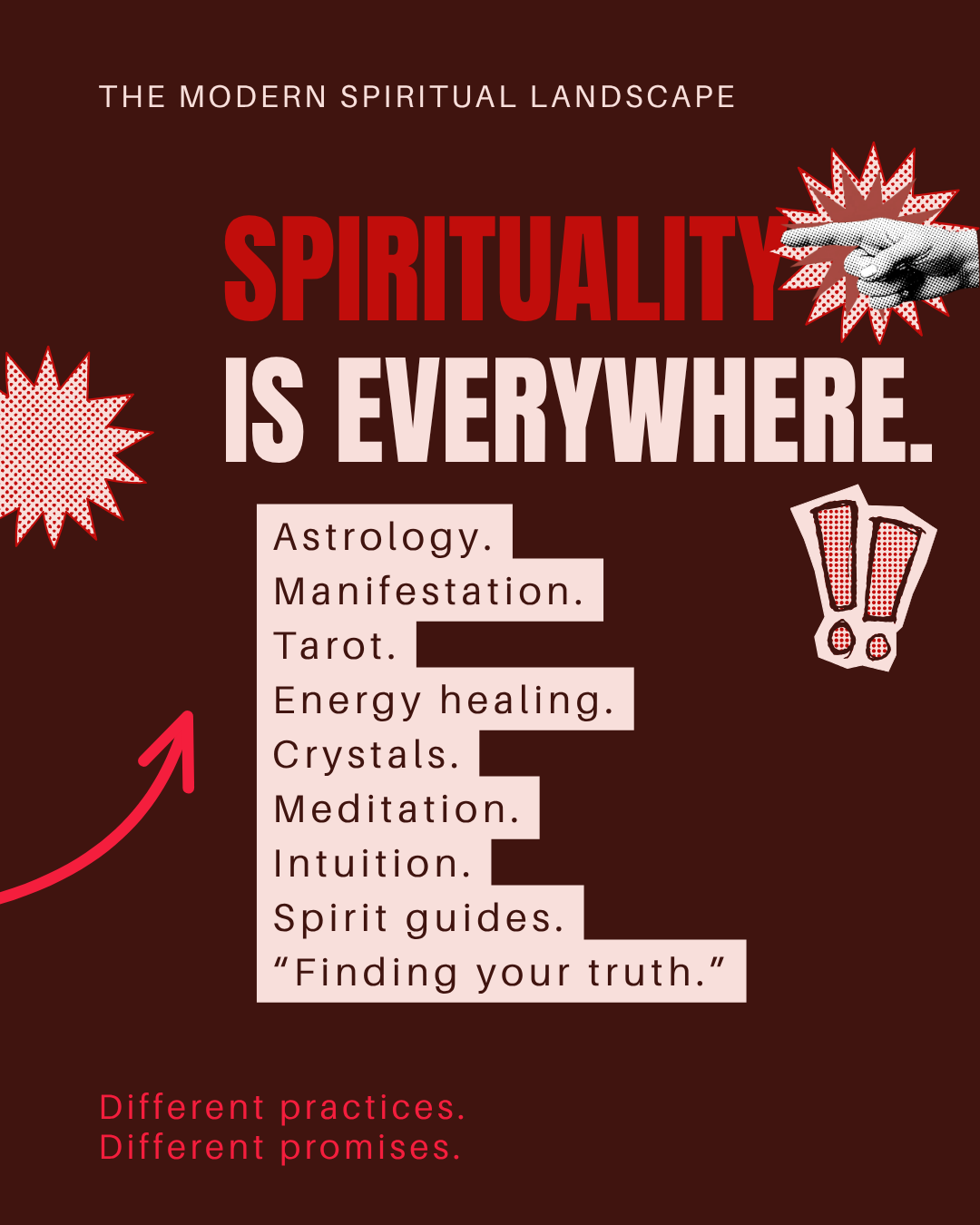
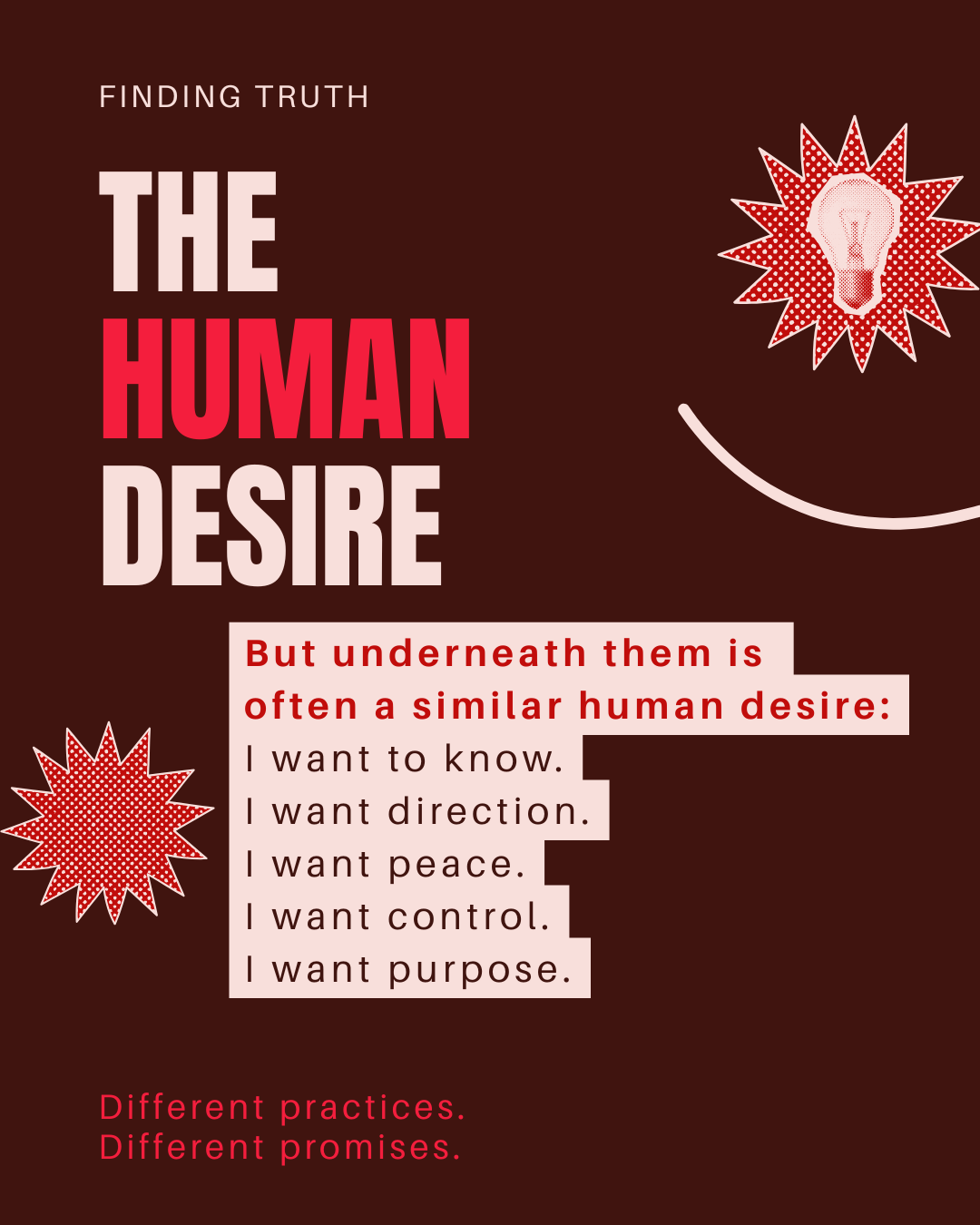
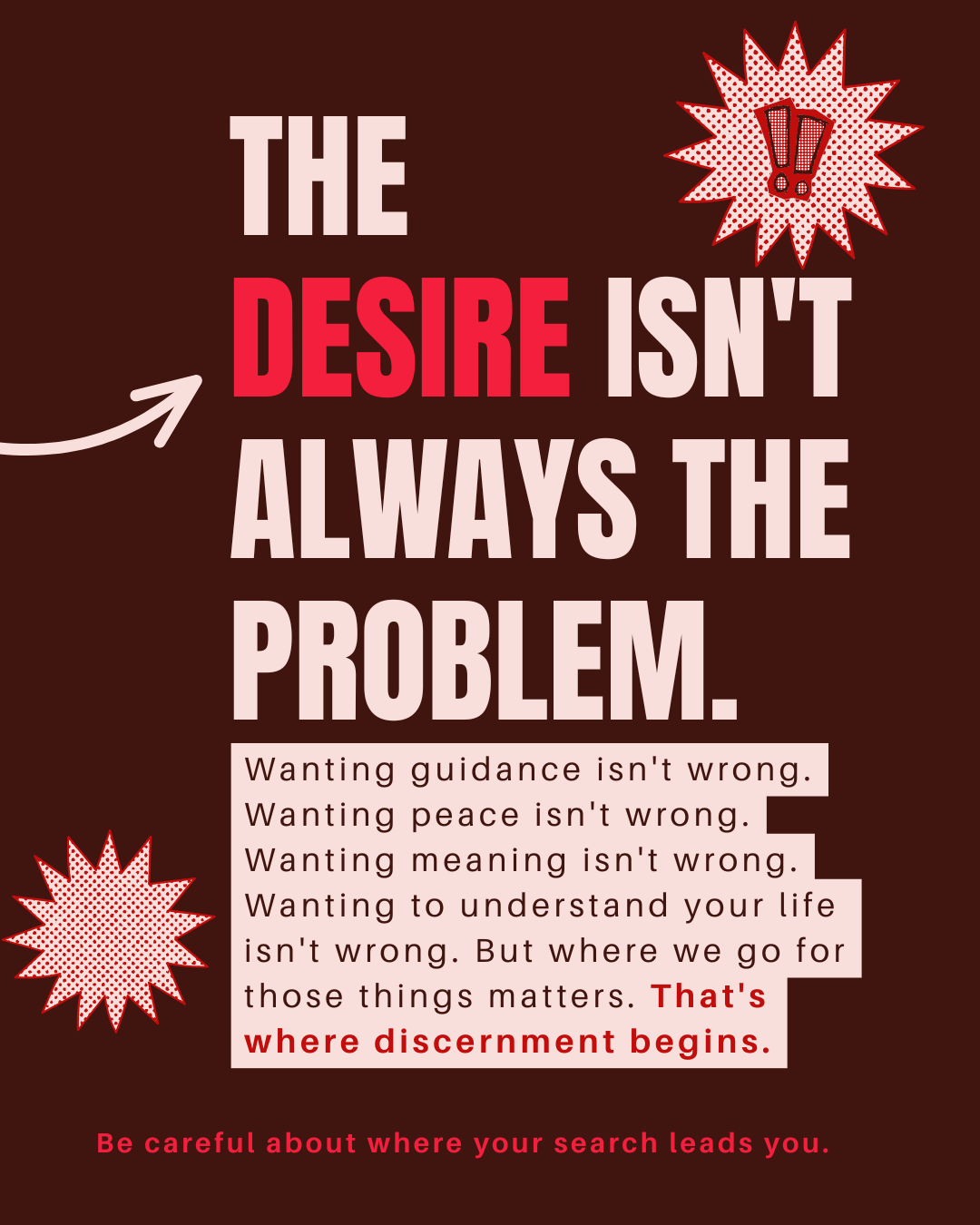
In a culture where spirituality can look like astrology, manifestation, energy work, crystals, tarot, meditation, intuition, or simply “finding your own truth,” spiritual disciplines invite us to examine not only what we practice, but where we are placing our trust. Prayer directs us toward communion with God rather than attempting to control an outcome; Scripture and study ground us in revealed truth rather than whatever feels true in the moment; discernment teaches us to test what we encounter rather than automatically trusting every spiritual impression; fasting and simplicity loosen our dependence on appetite, possessions, and self; solitude creates space to hear God rather than simply escape noise; worship redirects our attention toward God rather than an object, energy, or created thing; and submission reminds us that spiritual life is ultimately about surrender rather than self-mastery. The point is not to approach other spiritual practices with fear or mockery, but with biblical discernment. Not everything labeled “spiritual” is spiritually neutral. Christian spiritual formation begins with a relationship with the living God, is shaped by Scripture, and ultimately produces a life increasingly formed in the character of Christ.
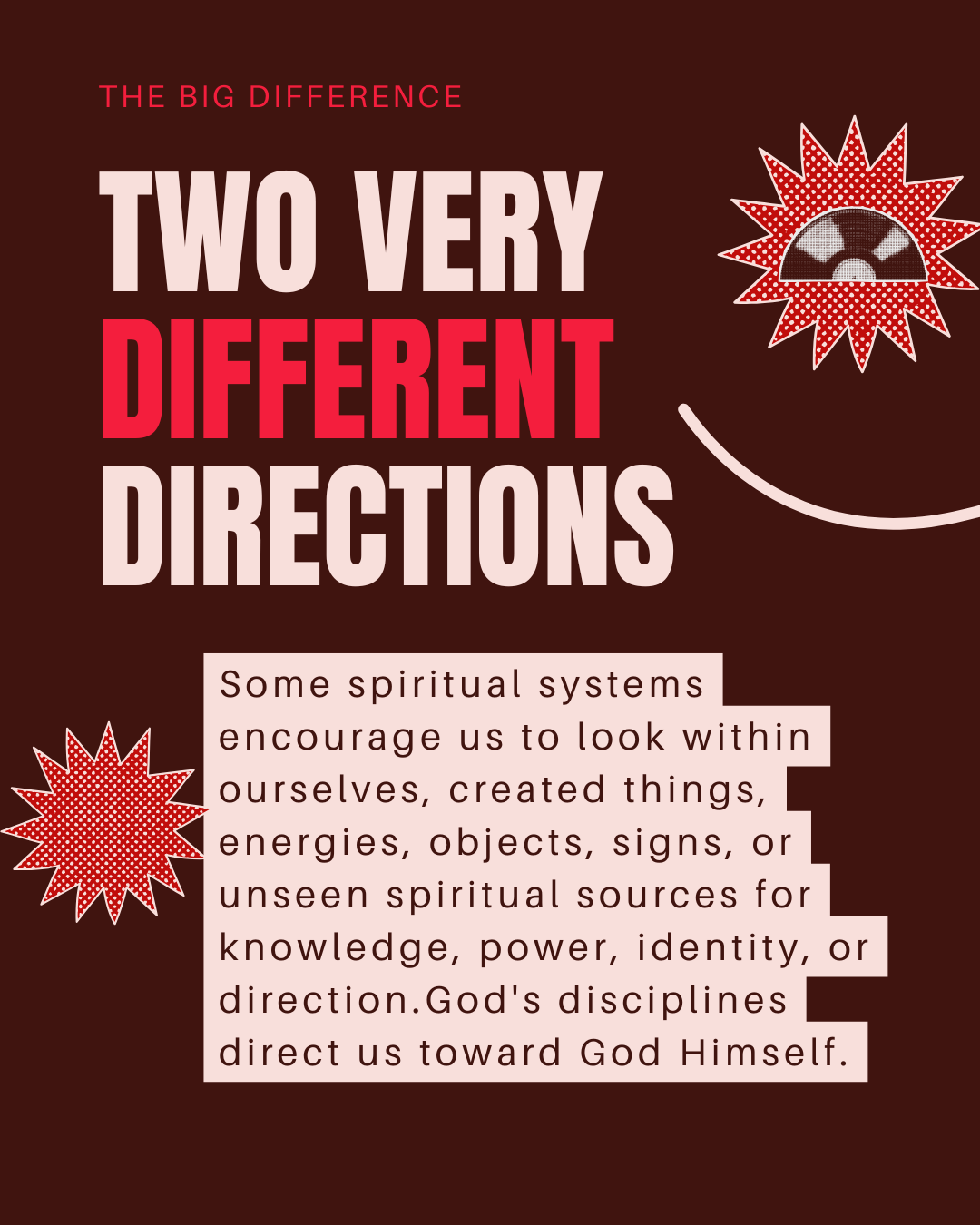
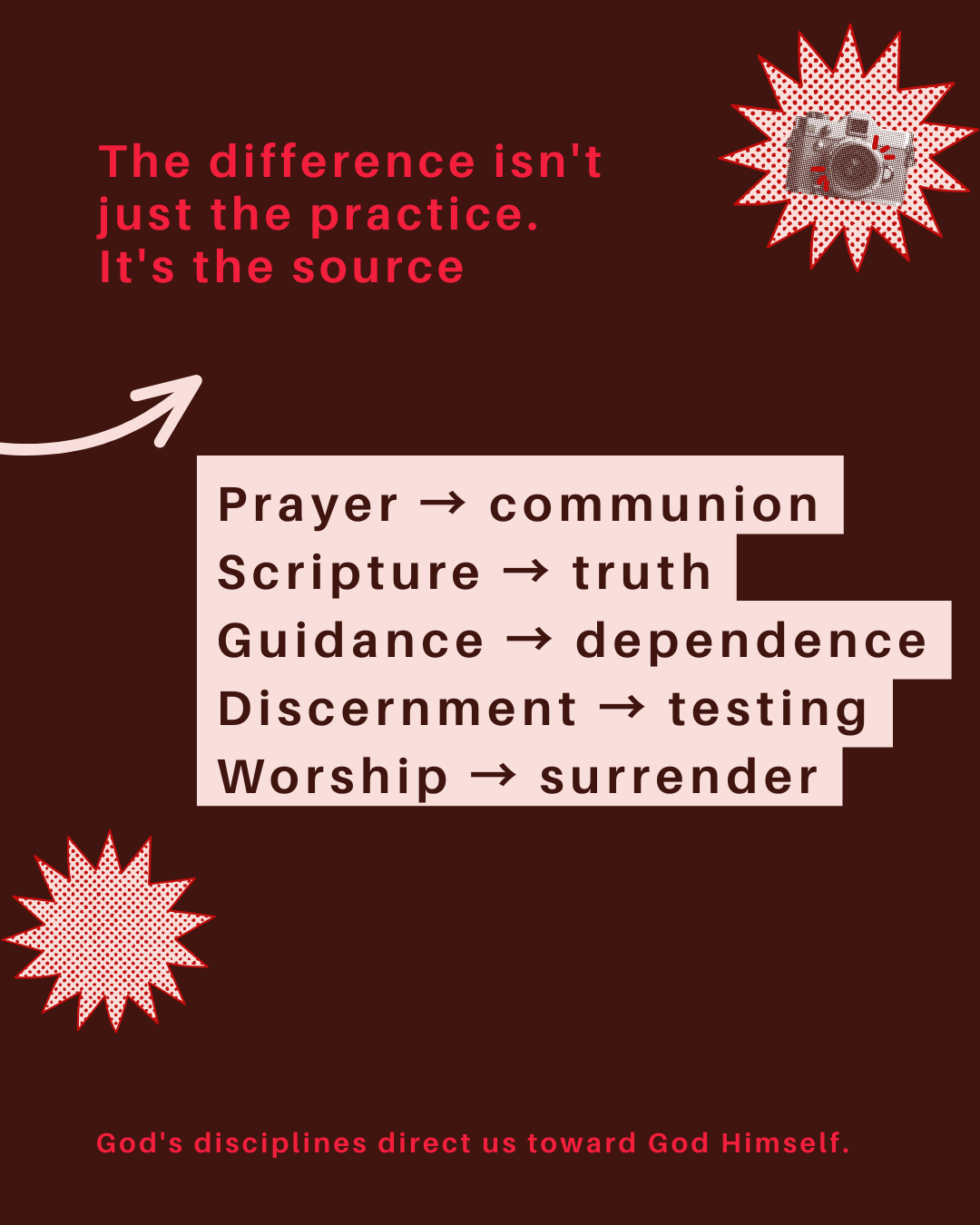
Hopefully, you have been following the previous sections of this series, because by now you can begin to see how the pieces connect. We have looked at spiritual gifts, spiritual formation, modern spiritual practices, and the importance of discerning what or whom we are placing our trust in. This is where Richard Foster’s Celebration of Discipline becomes especially meaningful. Foster helps us take this distinction from theory into a way of life. The disciplines give us practical ways to intentionally place ourselves before God so that the Holy Spirit can shape who we are becoming. The inward disciplines, meditation, prayer, fasting, and study form our inner life by teaching us to listen to God, depend on Him, renew our minds through Scripture, and surrender desires that compete for control. The outward disciplines, simplicity, solitude, submission, and service begin to shape the way we live and interact with others by loosening our dependence on possessions, noise, self-interest, and the need to control everything. The corporate disciplines, confession, worship, guidance, and celebration remind us that we were never designed to pursue spiritual growth alone, but as part of the Body of Christ. Together, these practices give us a biblical framework for responding to the same longings that can lead us toward other sources of guidance, identity, power, peace, or meaning. Instead of looking to signs, objects, energies, intuition, or other spiritual sources to determine our path, these disciplines continually turn our attention back toward God, His Word, His people, and His character.
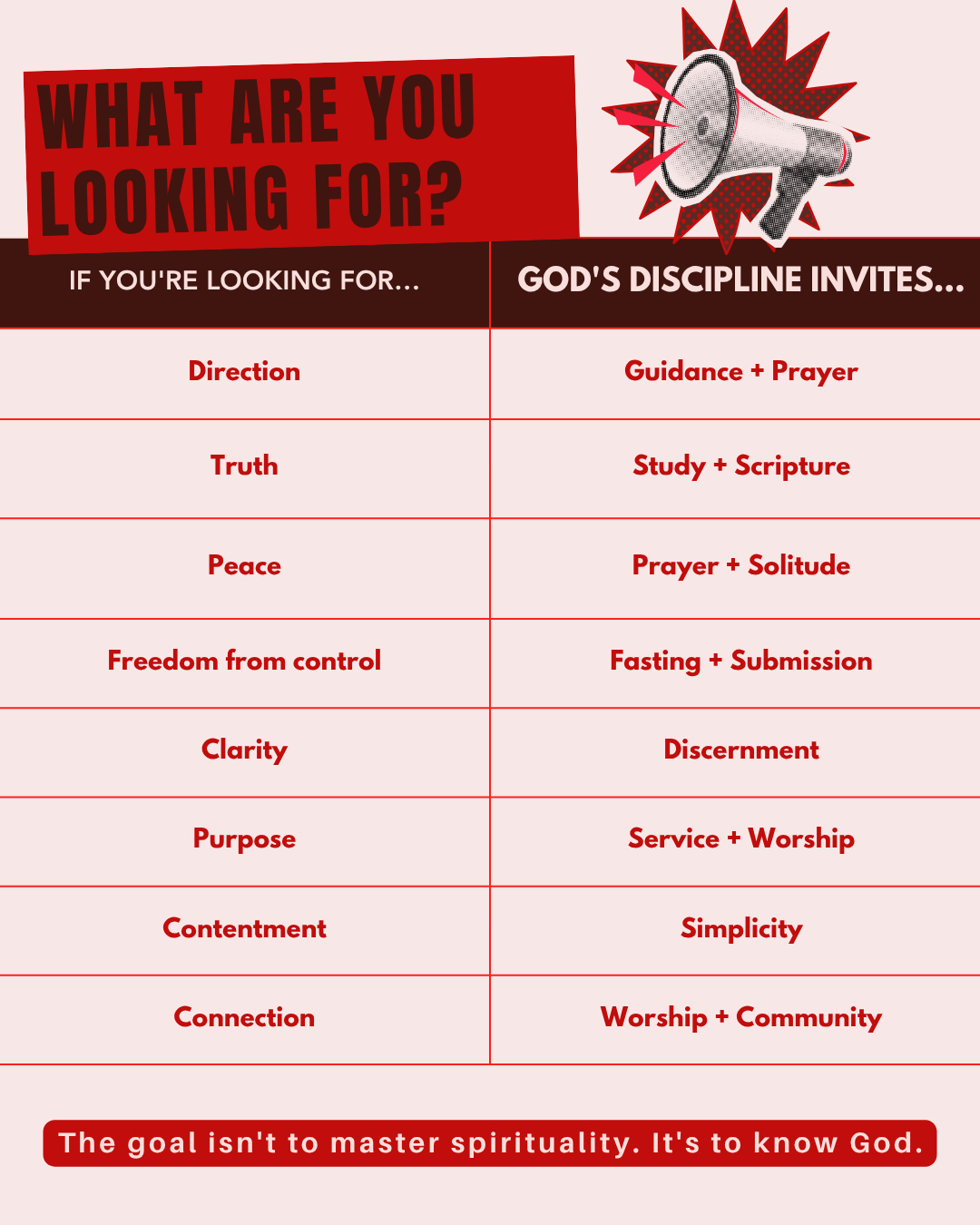
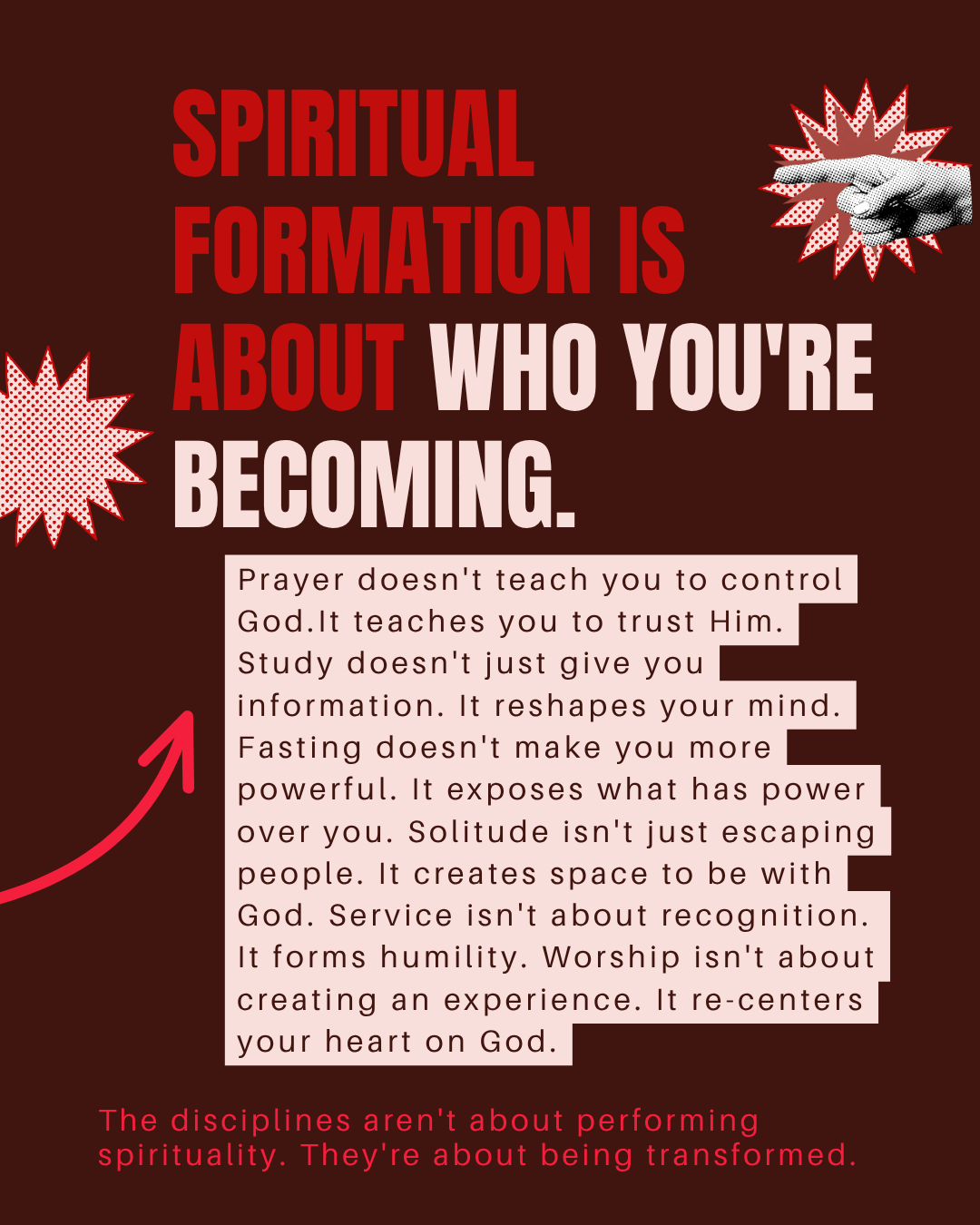
But I want to make something clear, the purpose of these disciplines is not simply to give us a list of “Christian practices” to replace other spiritual practices. The goal is transformation. God is not asking us to become better at performing religious activities; He is inviting us to become more like Christ. Prayer teaches us dependence instead of control. Study grounds us in truth instead of confusion. Discernment teaches us to test what we encounter rather than automatically trusting every spiritual impression. Fasting teaches surrender rather than self-indulgence. Simplicity teaches contentment rather than attachment. Solitude teaches attentiveness rather than constant distraction. Submission teaches humility rather than self-rule. Service teaches us to express love through action. Confession teaches honesty, repentance, and restoration. Worship re-centers our hearts on God. Guidance teaches us to seek God's direction through Scripture, prayer, and wise Christian community. Celebration teaches us to recognize God's goodness with gratitude and joy. This is why the disciplines matter. They continually redirect our hearts toward God until His truth begins to shape our thoughts, our choices, our relationships, and our desires. Over time, we become more grounded in Scripture, more sensitive to the Holy Spirit, more connected to the Body of Christ, and increasingly formed into the character of Jesus, truth, humility, love, obedience, compassion, and surrender.
Using the Chart as a Discernment Framework
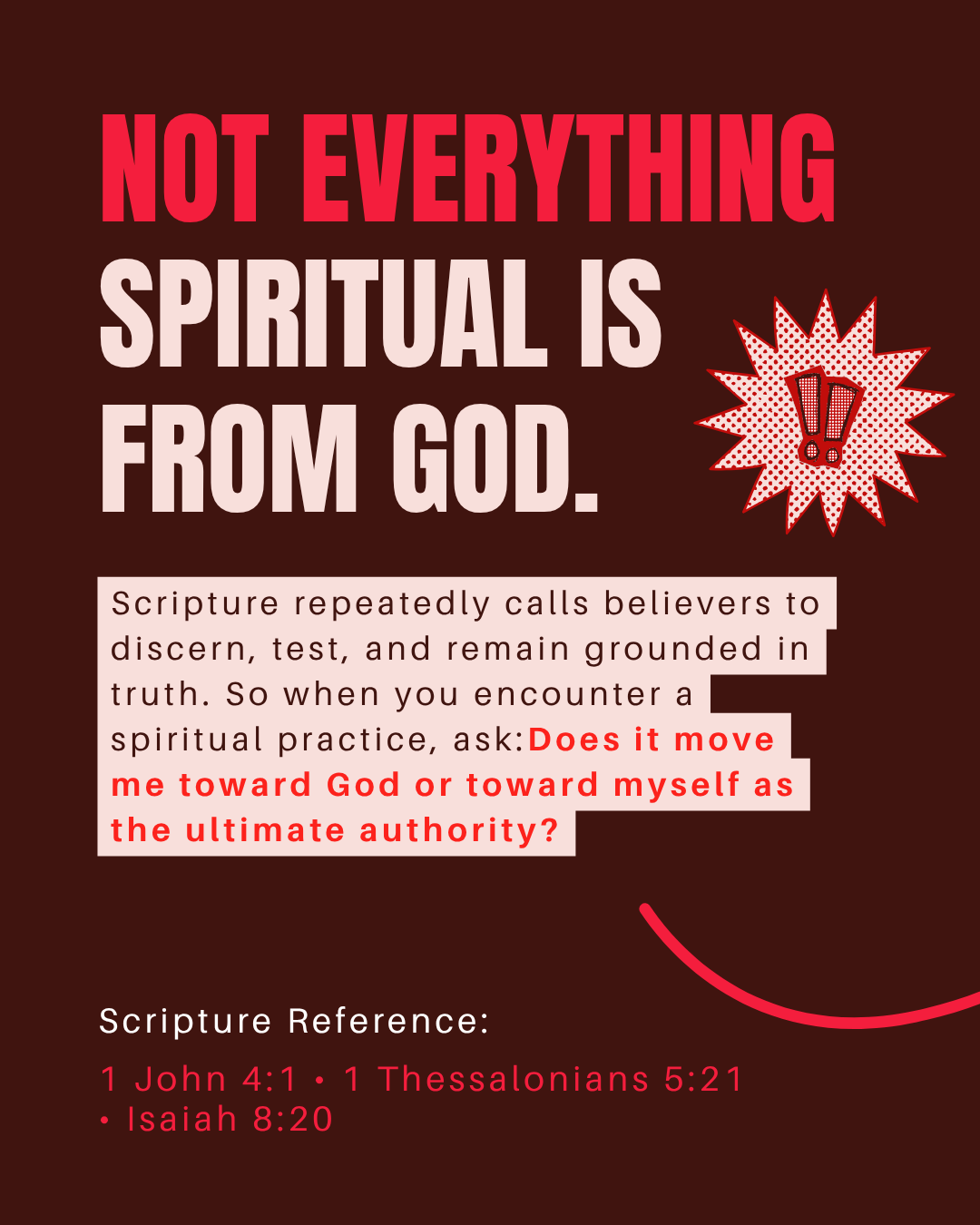
The charts that follow are designed to help bring structure to the process of spiritual discernment. Rather than simply labeling practices as acceptable or unacceptable, use the comparisons to ask deeper questions: What is this practice seeking to provide? Where does it direct my trust? What does it ask me to surrender to? What authority does it recognize? And what kind of person is it forming me to become? You will notice that many spiritual practices address legitimate human longings; guidance, peace, knowledge, healing, identity, purpose, or connection. The important distinction is not always the longing itself, but where that longing is directed and how it is being answered. Scripture calls us to test what we encounter rather than accepting something simply because it appears spiritual, 1 John 4:1 and 1 Thessalonians 5:21.
As you work through the chart, consider the corresponding God's Disciplines as pathways of transformation. Prayer, study, meditation, guidance, discernment, fasting, simplicity, solitude, submission, service, confession, worship, and celebration continually redirect the heart toward God, His Word, and the community of believers. The question becomes: Is this practice teaching me to trust God, surrender to Him, receive truth from His Word, love others, and become more like Christ or is it encouraging me to place ultimate trust in myself, an object, an experience, a created thing, or an unseen source apart from God? This framework helps us move beyond simply asking, “Is this spiritual?” and toward the more important question: “What is this forming in me, and is that formation consistent with the character of Christ?”
| 1. Core Biblical Categories | |
|---|---|
| Sorcery / Witchcraft | Prayer |
| Divination | Guidance |
| Incantations | Study |
| Witchcraft (general) | Meditation |
| Familiar Spirits | Discernment |
| Necromancy | Prayer |
| False Prophecy | Study |
| 2. Modern Divination Practices | |
| Horoscopes / Astrology | Guidance |
| Psychics / Mediums | Discernment |
| Tarot Cards | Study |
| Ouija Boards | Prayer |
| Numerology | Study |
| Dream Interpretation Systems | Meditation |
| Reading Omens | Guidance |
| 3. New Age & Manifestation Systems | |
| Manifestation | Prayer |
| Law of Attraction | Submission |
| Energy Healing | Prayer |
| New Age Meditation | Meditation |
| Spirit Guides | Discernment |
| 4. Object-Based Spiritual Practices | |
| Crystals | Simplicity |
| Amulets / Talismans | Faith |
| Idol Objects | Worship |
| 5. Rituals, Curses, Manipulation | |
| Spells / Rituals | Prayer |
| Curses / Hexes | Service |
| Binding Spirits | Submission |
| Manipulative Rituals | Fasting |
| 6. Idolatry & Spiritual Compromise | |
| Food to Idols | Simplicity |
| Idol Worship | Worship |
| Pagan Systems | Study |
| Syncretism | Submission |
| 7. Subtle / Hidden Modern Forms | |
| Channeling Energy | Meditation |
| Intuition-only Guidance | Discernment |
| Visualization Power Systems | Prayer |
| Consciousness Expansion | Solitude |
| Mixed Spiritual Beliefs | Study |