8 Bible Study Methods for a Deeper Walk
Have you ever opened your Bible and wondered, “Where do I even start?” Have you read a familiar passage but felt like you were missing something deeper? Or have you ever asked yourself, “How do I move from simply reading Scripture to actually letting it change me?”
Bible study does not have to feel complicated. You do not need an entire library of commentaries, hours of free time, or a perfect study routine to begin going deeper. Sometimes, you simply need a helpful framework that slows you down enough to pay attention.
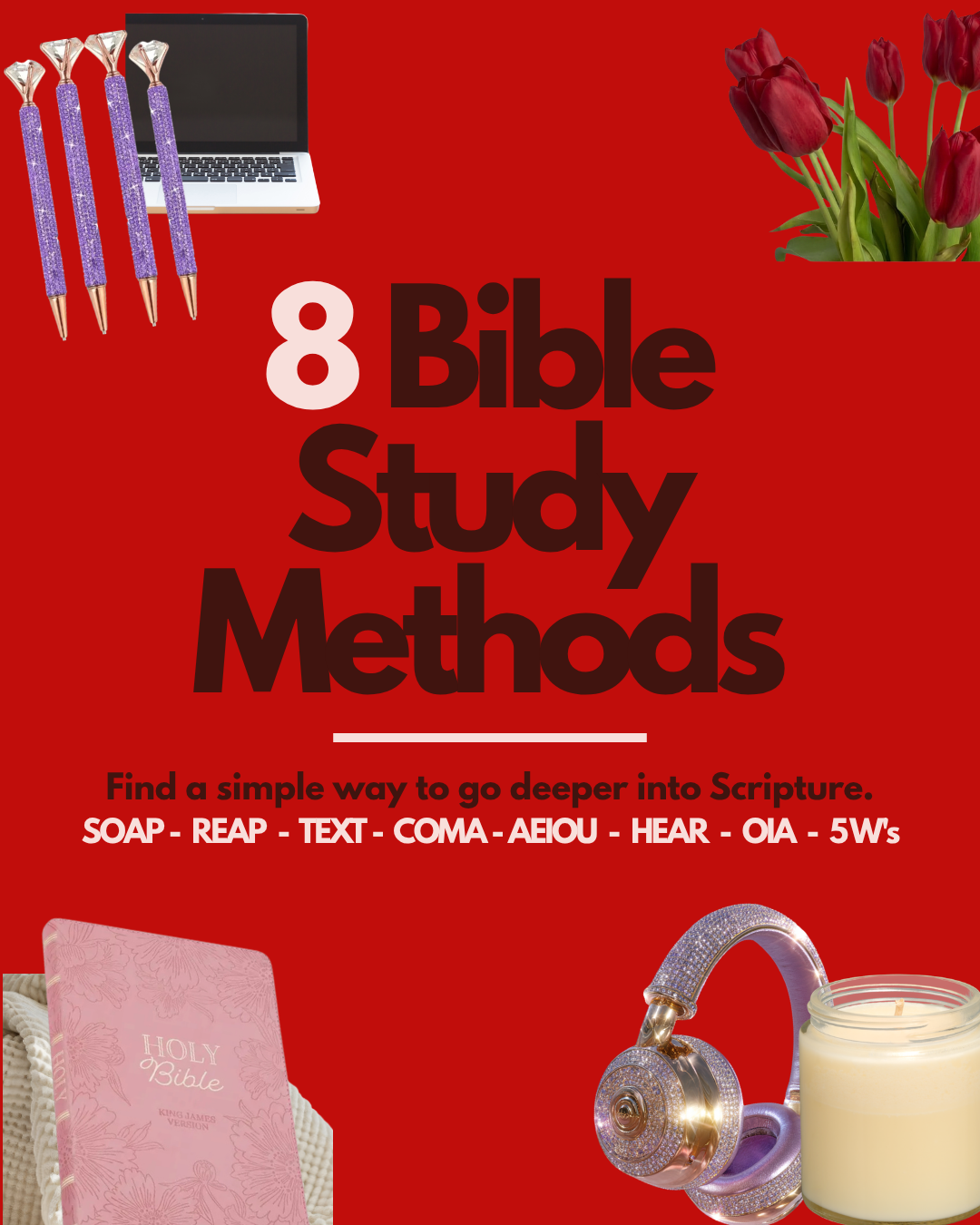
Here are eight Bible study methods that can help you approach Scripture with greater intention. The first four are:
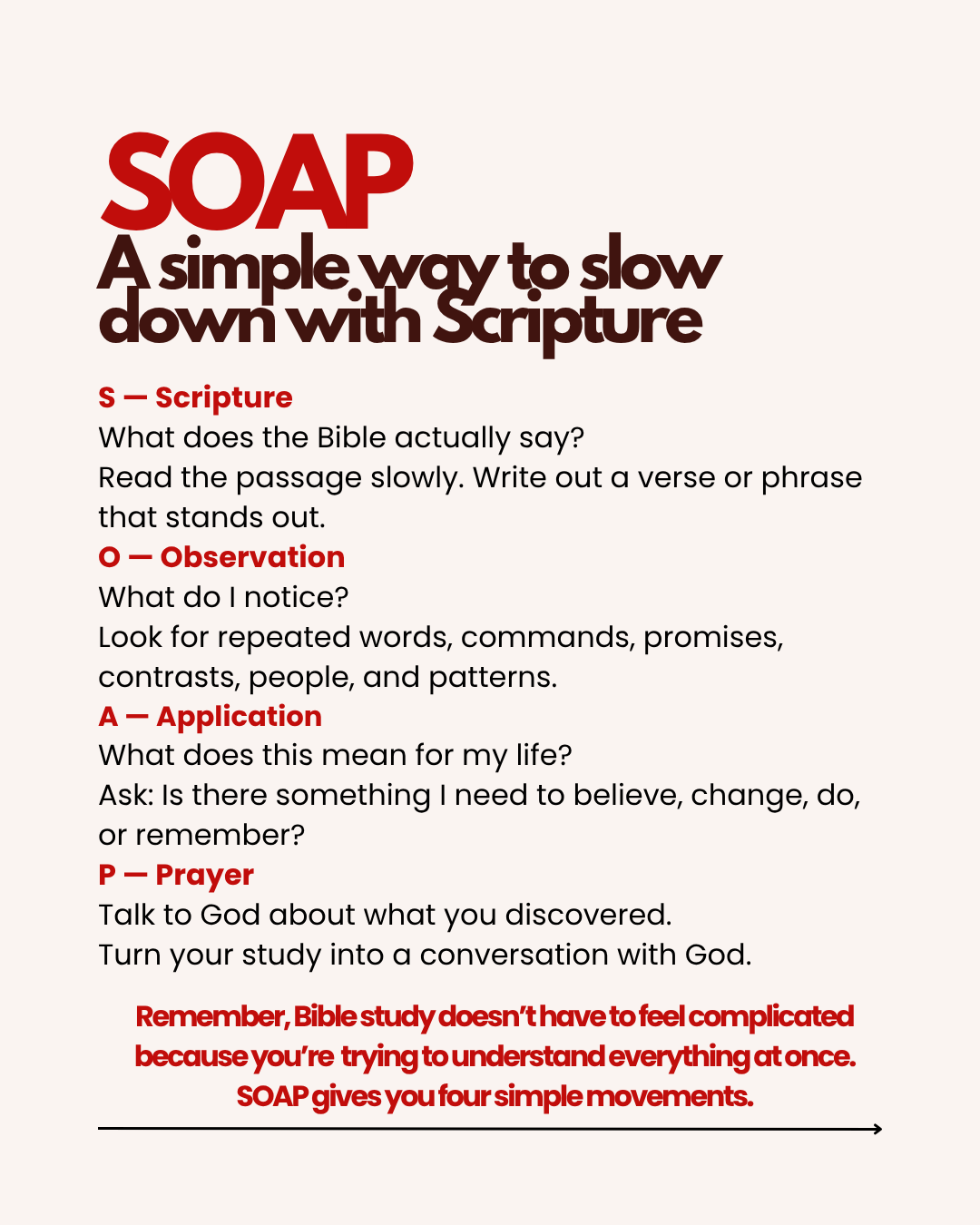
SOAP: Slow Down and Listen
SOAP offers a simple rhythm for engaging with Scripture. Rather than rushing through a chapter just to check Bible reading off your list, this approach encourages you to slow down, notice what stands out, consider how it connects to your life, and bring what you discover into prayer.
It is especially helpful when you want your Bible study to become more personal and reflective. The goal is not simply to collect information. It is to read, notice, respond, and allow Scripture to become part of your conversation with God.
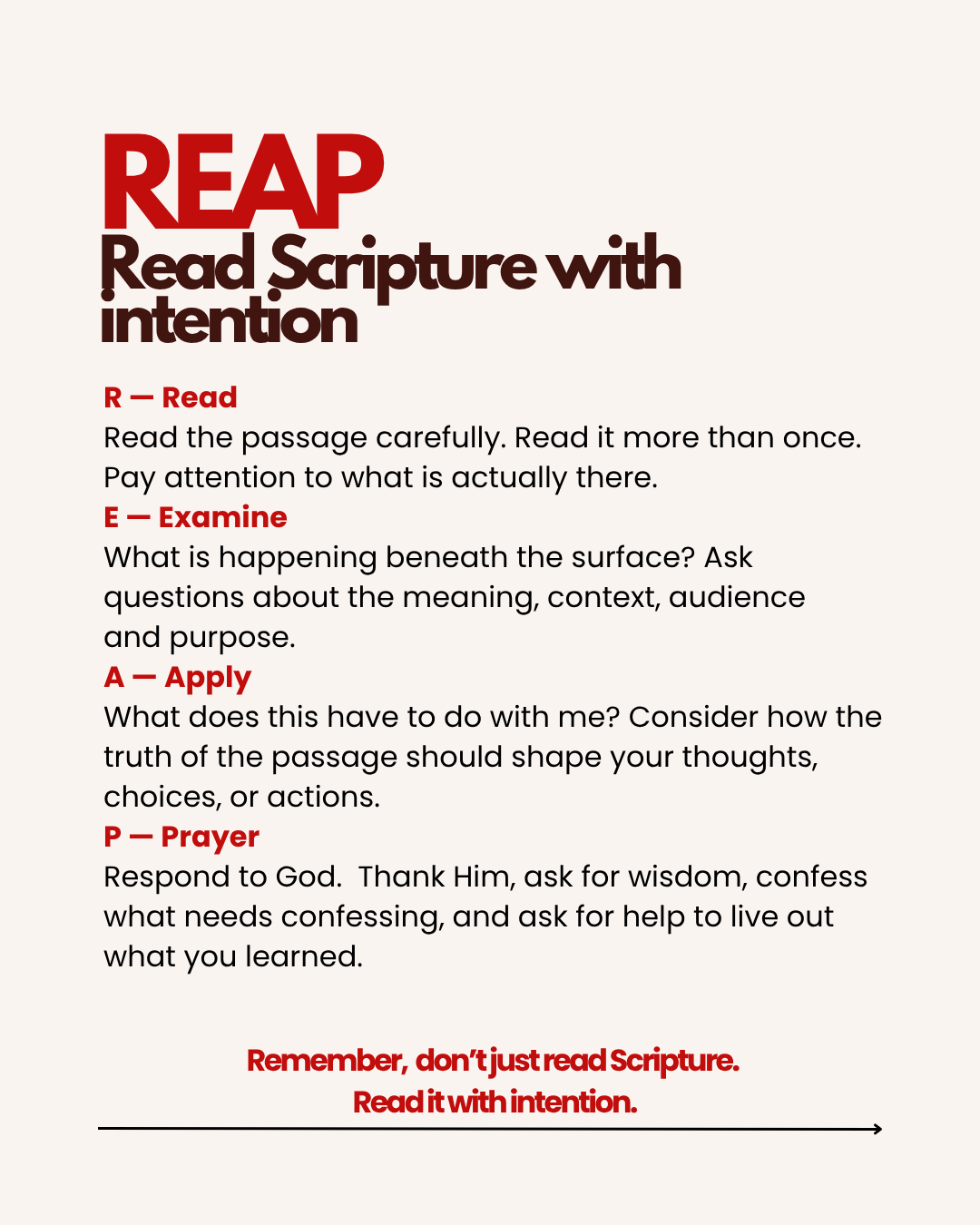
REAP: Read With Intention
Sometimes we read Scripture quickly because we are focused on finishing rather than understanding. REAP encourages a more intentional approach.
This method gives you space to read carefully, examine what is happening, consider how the truth applies to your life, and respond to God through prayer. It can be especially useful when you find yourself reading the same passages repeatedly without really stopping to think about them.
Don't just read Scripture. Read it with intention.
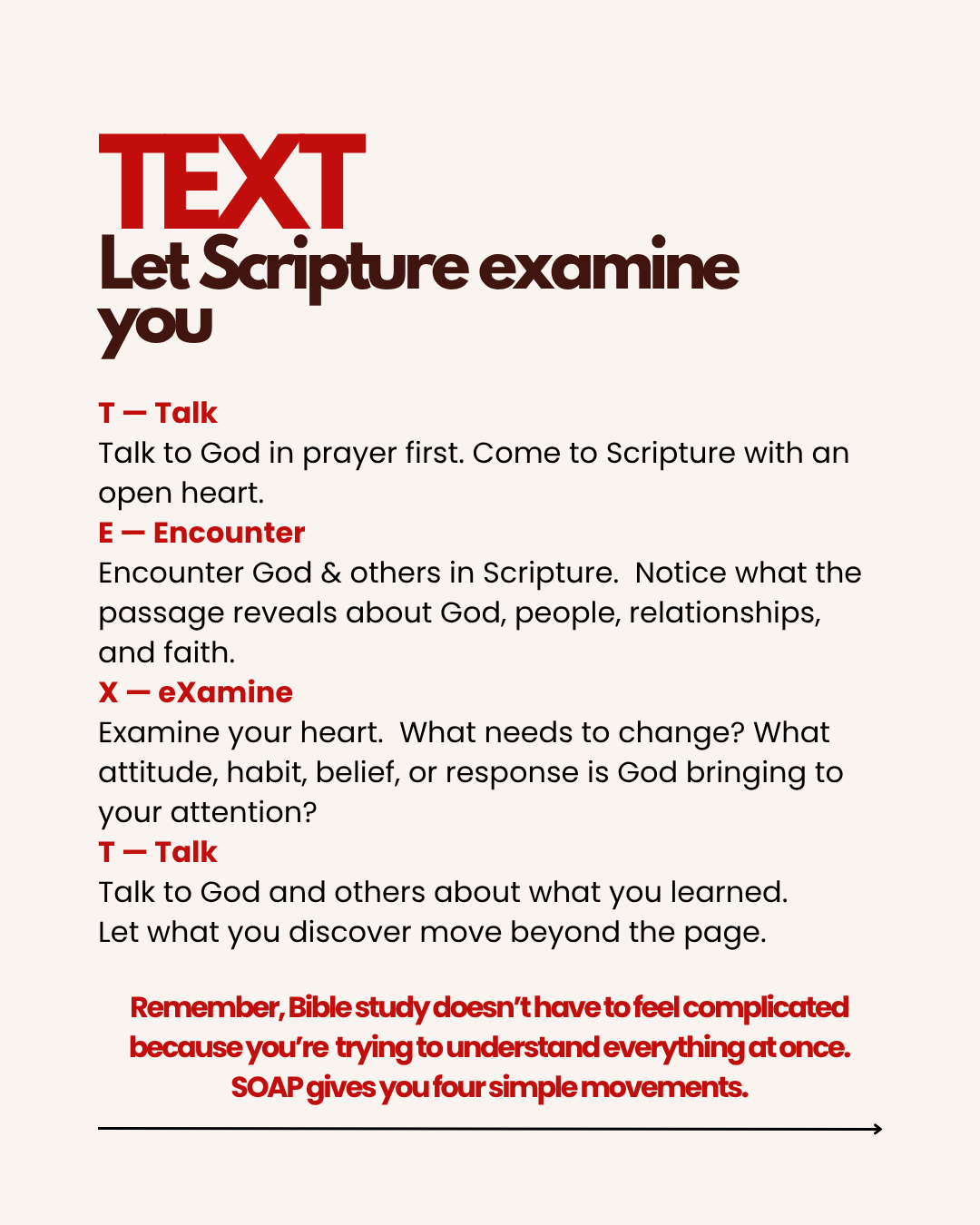
TEXT: Let Scripture Examine You
Bible study is not only about learning more about the Bible. Sometimes Scripture is meant to expose what is happening inside of us.
TEXT encourages you to approach Scripture with an open heart, encounter what it reveals about God and people, examine your own attitudes and responses, and then talk with God and others about what you are learning.
The deeper question becomes, “What is God changing in me?”
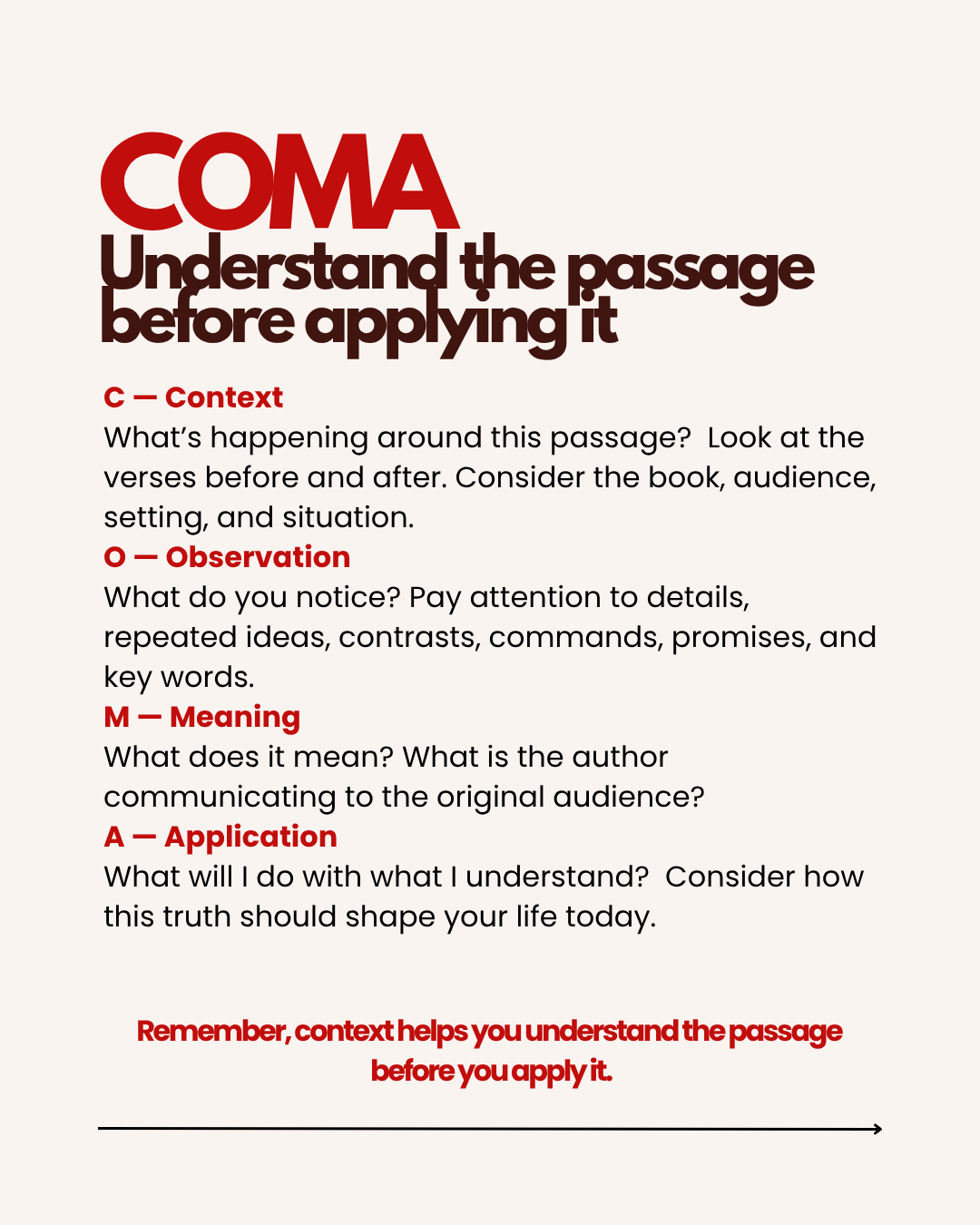
COMA: Context Changes Everything
One of the biggest dangers in Bible study is taking a verse out of context. COMA encourages you to slow down and understand what is happening around a passage before deciding how to apply it.
Look at the surrounding verses, consider the audience and setting, observe the details, think about what the author was communicating, and then consider what that truth means for your life today.
Sometimes a passage becomes much clearer when you stop looking at one verse and start looking at the whole conversation.
PAUSE & PONDER
Are you reading the Bible to simply finish a chapter, or are you slowing down enough to let God speak to your heart? What if the verse you keep reading is not just giving you information, but inviting you into transformation? Before you rush to the next passage, ask yourself, “What is God showing me, and what will I do with what He has shown me?” Sometimes the deepest Bible study begins when you stop reading and start listening. Consider this as you review these methods. The remaining four are:
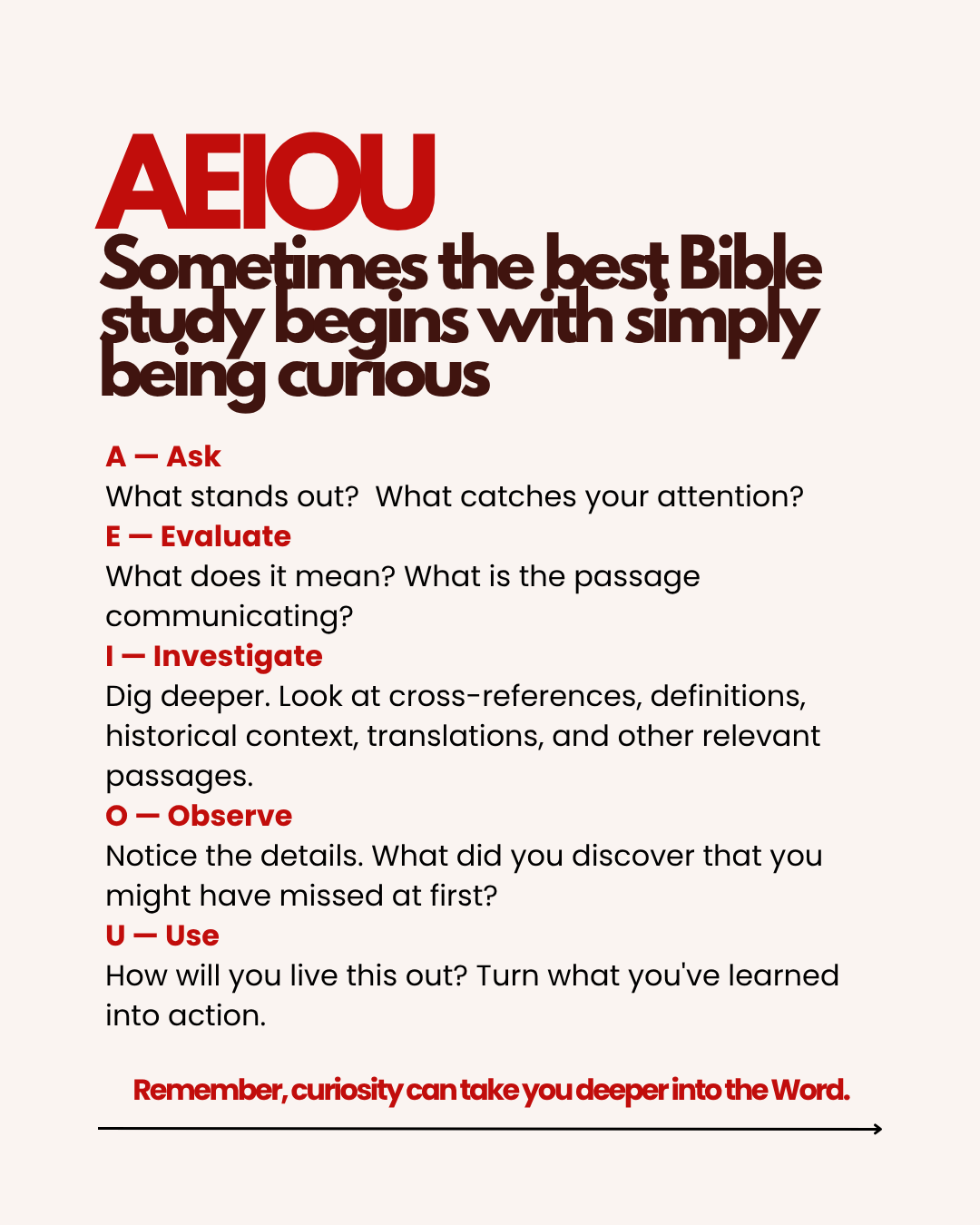
AEIOU: Get Curious About Scripture
Curiosity can take you deeper.
AEIOU encourages you to approach Scripture with questions rather than simply looking for quick answers. What catches your attention? What does the passage mean? What can you investigate further? What details did you initially miss? How can you live out what you discovered?
This method can make Bible study feel like exploration. Cross-references, historical information, definitions, translations, and related passages can open doors you may not have noticed before.
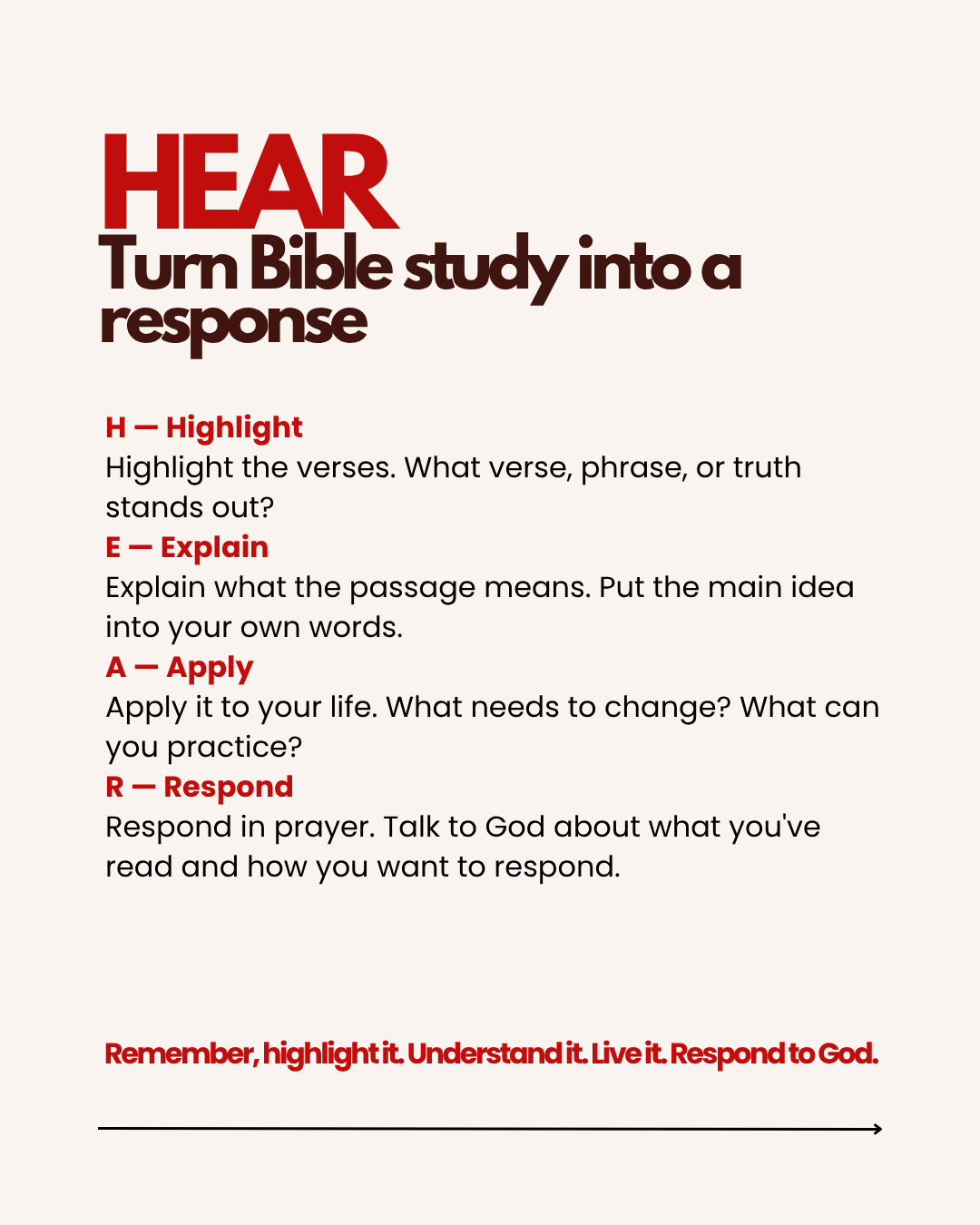
HEAR: Don't Close Your Bible Yet
What if Bible study did not end when you closed your Bible?
HEAR moves you from reading toward response. You identify what stands out, explain the central idea in your own words, consider what needs to change, and then respond to God in prayer.
It is a helpful reminder that Scripture is not simply something to highlight. It is something to understand, practice, and respond to.
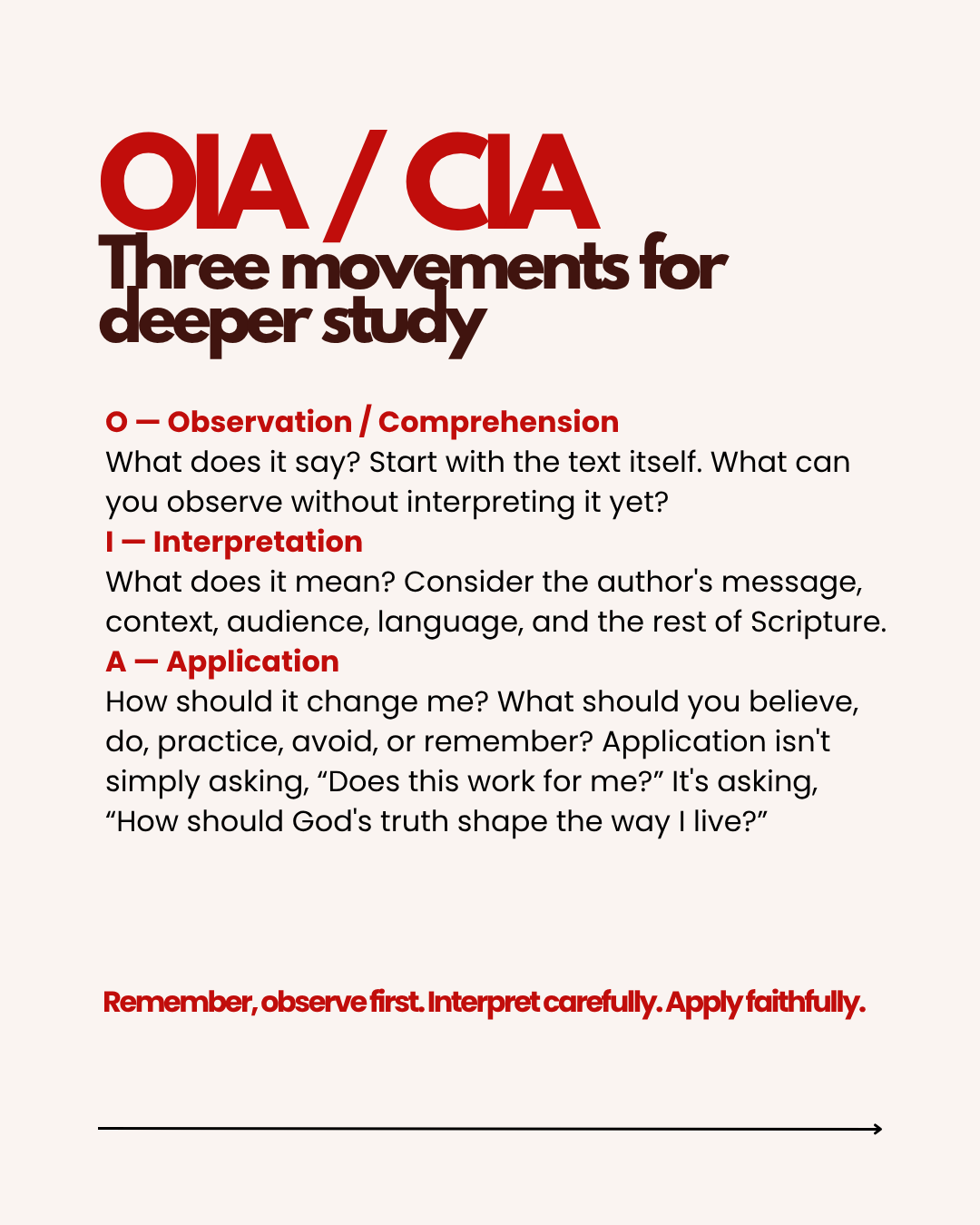
OIA or CIA: Go Deeper Before You Apply
OIA and CIA provide a framework for separating what the Bible actually says from what we think it means.
This approach begins by observing or comprehending the passage before moving into interpretation. From there, you consider how God's truth should shape your life.
That distinction matters. Application is not simply asking, “Does this work for me?” It is asking, “How should God's truth shape the way I live?”
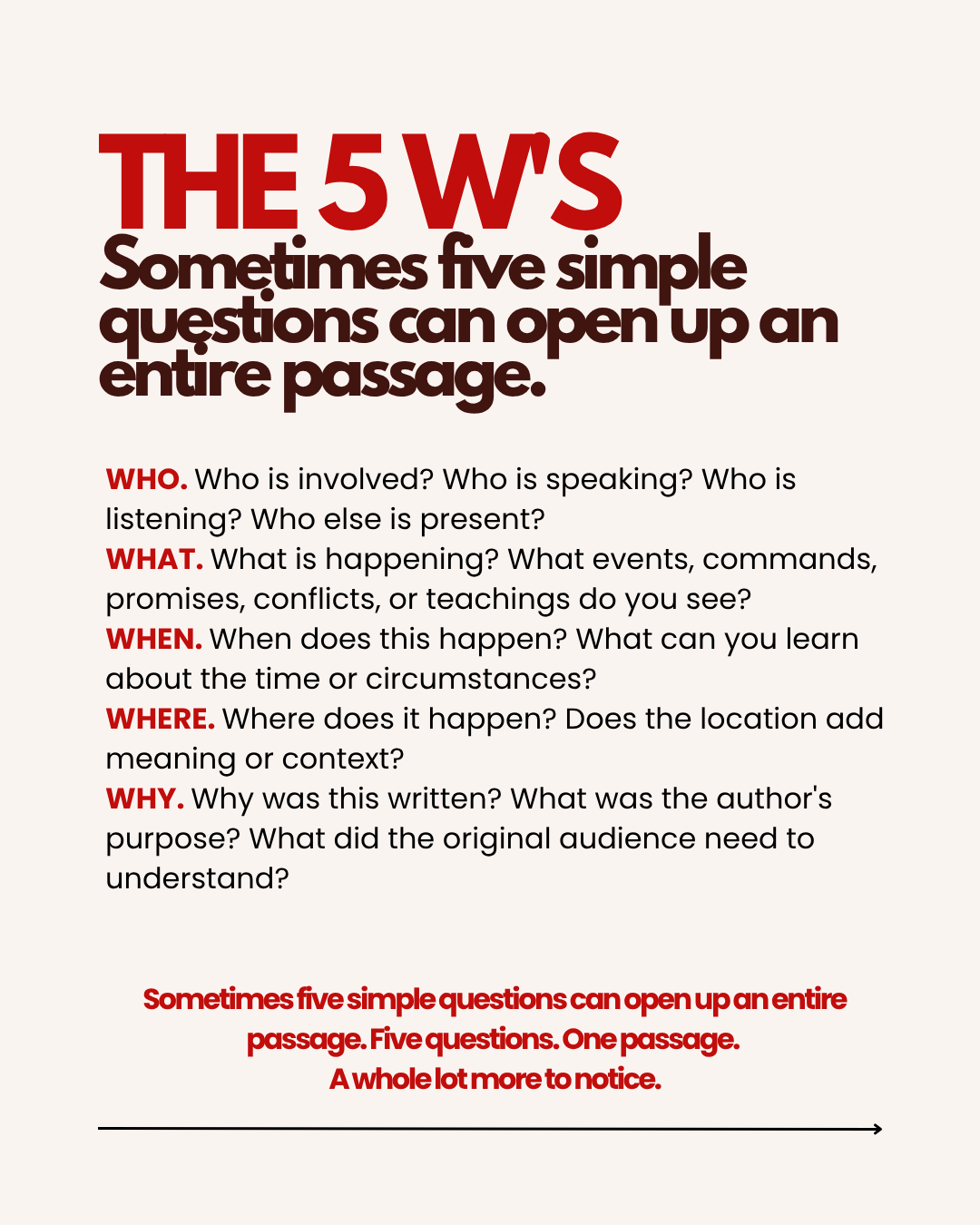
The 5 W's: Start With the Basics
Sometimes the simplest questions can reveal the most.
The 5 W's encourage you to investigate who is involved, what is happening, when it happened, where it happened, and why the passage was written.
These questions can help you slow down and notice details that might otherwise disappear when you read too quickly. You may be surprised by how much you can discover simply by becoming a more careful reader.
The Goal Is Not the Method
With eight options on the table, you may be tempted to ask, “Which one should I use?” You do not have to use all eight. Some methods may help you observe. Others may help you understand context, ask better questions, or focus on application and prayer. Try one that fits where you are right now and give yourself permission to grow from there.
The goal is not to find the fanciest Bible study method. The goal is to develop a deeper relationship with God through His Word. These methods are suggestions, not replacements for daily communication with God. Bible study should never become a formula that takes the place of prayer, worship, obedience, or listening for the leading of the Holy Spirit. Let God speak through Scripture and allow His truth to shape the way you live.