Is It Sacred or Seduced?
A Call to Holiness. What if the greatest crisis facing the modern church is not a lack of information, but a lack of Holiness? What happens when we want the blessings of a holy God while resisting the holy process by which He transforms them? In a culture where everything is increasingly marketed, customized, and made convenient, Scripture delivers a daring message, God has not called His people merely to attend church, carry a Bible, or claim the name of Christ. He has called them to be holy. Leviticus 20:7-8 brings that command into sharp focus and introduces us to the sacred character of Jehovah-Mekadesh, the LORD who sanctifies you, the LORD who makes you holy. This is not merely a religious slogan for another generation. It is a divine declaration for us today who are navigating a world where compromise is celebrated, purity is mocked and biblical conviction is increasingly treated as just another option on the spiritual menu. Jehovah-Mekadesh still calls His people out of spiritual slumber and into sacred surrender.
The Larger Covenant Framework
Leviticus 20 was written within the larger covenant framework God established with Israel after bringing them out of Egypt. The nation had been rescued from bondage, but freedom from Egypt did not mean freedom to live however they pleased. God was forming Israel into a people who would reflect His character and live distinctly among the surrounding nations. The chapter addresses serious moral and spiritual offenses, including idolatry, sexual immorality, dishonoring parents, and other practices that threatened Israel's covenant relationship with God. These commands emphasized that Israel's identity was not simply ethnic or national, but fundamentally spiritual because they belonged to a holy God. Leviticus 20 therefore functions as both a warning and a witness, showing that covenant relationship carries covenant responsibility. The people were not called to imitate the nations around them. They were called to belong to Jehovah.
Today, we in Christ are likewise called to remember that freedom through Christ is not freedom to follow every cultural desire, but freedom to live surrendered to God. In a world filled with competing spiritual practices, shifting moral standards, and pressures to conform, Leviticus 20 reminds us that our identity is rooted in belonging to a holy God, not in imitating the culture around us. We are not called to blend in with the world, but to live distinctly, reflecting the character of Jehovah-Mekadesh in a generation searching for what is sacred.
Consecration Before Comfort
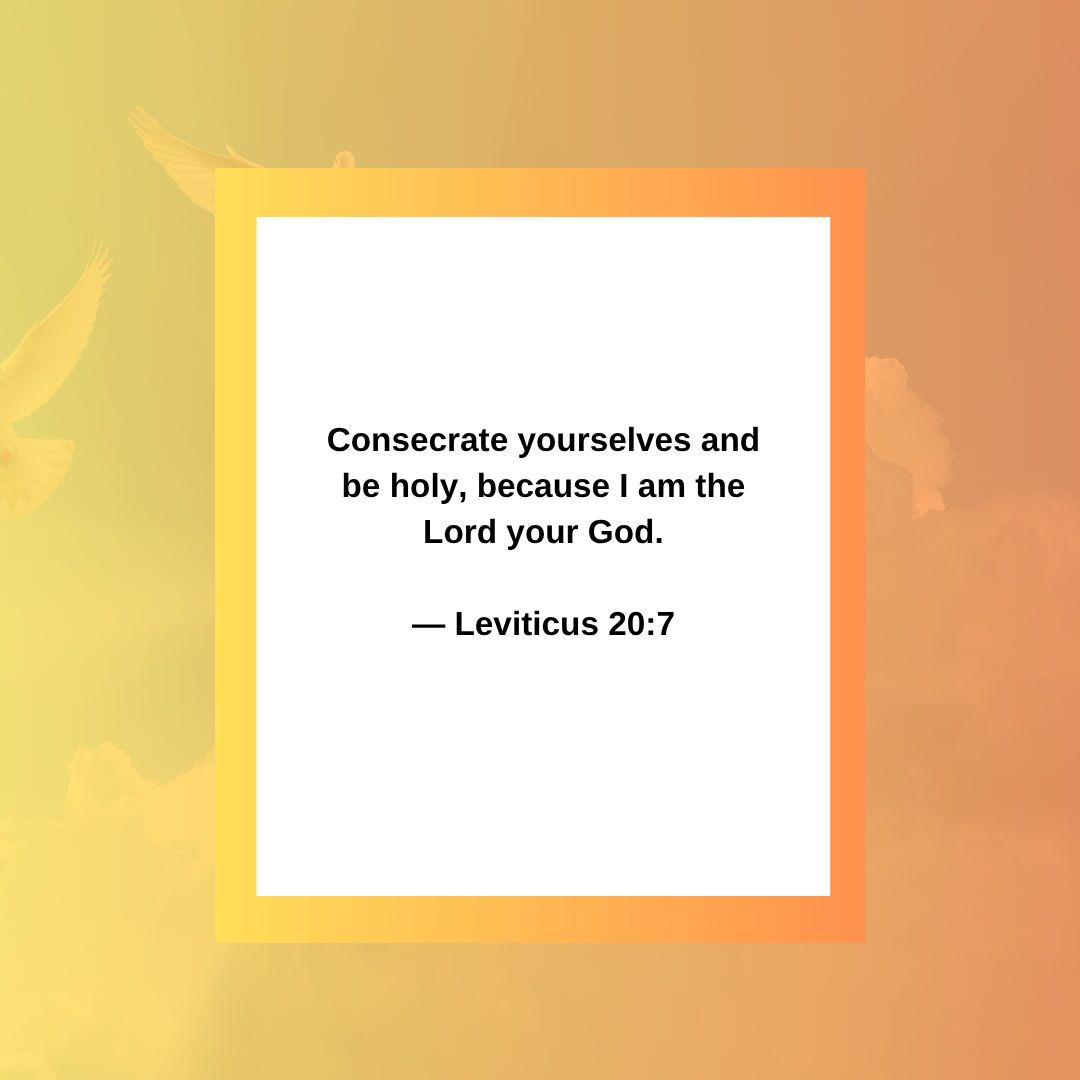
“Consecrate yourselves and be holy, because I am the LORD your God. Keep my decrees and follow them. I am the LORD, who makes you holy.” - Leviticus 20:7-8
The command begins with two words that can confront today’s church, “Consecrate yourselves.” Consecration means setting yourself apart for God. It speaks of intentional surrender, deliberate obedience, and a willingness to allow God to govern every area of life. Jehovah-Mekadesh is not calling His people to a polished religious appearance while their private lives remain untouched. He calls for holiness that reaches the heart, the home, the habits, the relationships, the entertainment, the ambitions, and the secret places no audience can see. The world may tell us to follow our feelings, protect their preferences and define truth for themselves, but Jehovah-Mekadesh declares that we are called to something higher. “Be holy, because I am the LORD your God.”
That statement reveals the foundation of holiness. God does not say, “Be holy because everyone will approve of you.” He does not say, “Be holy because it will make your life easy.” He says, “Because I am the LORD your God.” Holiness begins with who God is. Jehovah is not merely another name competing for human attention. He is the covenant Lord, the One who delivered Israel, established His presence among His people, and demanded their exclusive devotion. For Christians, this sacred reality finds its fulfillment in Christ, who calls His followers to live as people transformed by grace. Grace does not make holiness unnecessary. Grace makes holiness possible.
Jehovah-Mekadesh Makes the Difference
The most breathtaking truth in these verses appears at the end, “I am the LORD, who makes you holy.” This is where the message moves from command to comfort. God commands holiness, but God also provides the sanctifying power necessary for His people to pursue it. Jehovah-Mekadesh does not stand at a distance shouting instructions while leaving His people powerless. He works within those who belong to Him. He corrects, cleanses, convicts, disciplines, restores, and transforms. The holy life is not produced by human determination alone. It is the work of God in a surrendered vessel.
This distinction matters enormously for modern believers. Some people treat holiness as legalism, while others treat grace as permission to live without boundaries. Scripture rejects both extremes. Biblical holiness is neither self-righteous performance nor careless Christianity. It is a life increasingly yielded to God. We do not sanctify ourselves independently of Him. We respond to His sanctifying work by obeying His Word, resisting sin, pursuing righteousness and continually surrendering our will to His.
A Generation Called to Stand
We face temptations that may look different from those described in Leviticus, but the battle over allegiance remains the same. Idolatry may wear the clothing of materialism, celebrity, ambition, pleasure, political obsession, or personal success. Sexual immorality can be carried into the privacy of a smartphone. Pride can hide behind religious language. Disobedience can be disguised as personal freedom. Yet Jehovah-Mekadesh still asks the same fundamental question, Who owns your life?
The answer cannot merely be found in a Sunday confession. It must become visible in Monday's decisions. Holiness means choosing integrity when compromise would be profitable. It means honoring God when nobody is watching. It means refusing to entertain what continually poisons the soul. It means forgiving when bitterness feels justified, telling the truth when deception seems easier and pursuing purity when culture celebrates indulgence. For believers in Christ, holiness is not about becoming worthy of God's love. It is about living as people who have already encountered His grace.
The Holy Hope
Jehovah-Mekadesh is both the holy God who calls us higher and the gracious God who helps us get there. His command is serious, but His presence is sufficient. His standard is high, but His sanctifying power is greater than our weakness. The Christian life is not a performance designed to impress heaven. It is a surrendered relationship in which God continually shapes His people into the likeness of Christ.
So let the church stop asking how close it can get to compromise and start asking how close it can walk with God. Let believers stop treating holiness as an embarrassing relic of the past and rediscover it as a beautiful evidence of belonging to Christ. The world does not need another generation of believers who merely talk about God. It needs believers whose lives testify that God is holy, God is present, and God still transforms people.
Jehovah-Mekadesh has not changed. His call has not weakened. His holiness has not expired. Consecrate yourself. Be holy. Walk in obedience. And remember the promise behind the command, “I am the LORD, who makes you holy.”