Stand for God even when the world stands against righteousness. What happens when the promise of God seems impossible, the evidence says otherwise, and the clock has nearly run out? What do you do when your circumstances contradict everything you have prayed for? And how do you remain faithful when standing for God seems to put you at odds with the very world in which you live?
We are living in a generation where serving God and standing for righteousness can feel increasingly difficult. Faith is challenged, biblical convictions are questioned, and those who choose to live according to God's Word may find themselves criticized, marginalized, misunderstood or even persecuted. The battle between truth and deception, righteousness and wickedness, obedience and compromise is not merely a cultural struggle for believers; it is a spiritual battle.
Every day, Christians face decisions about whether to stand firm in their convictions or surrender to the pressure to fit in. Some are tempted to soften their beliefs to avoid criticism. Others wonder whether remaining faithful is worth the personal cost. And many are praying, believing, and waiting on God while everything around them seems to suggest that righteousness is losing ground.
But here is the question we must confront. What happens when the world around you changes, the pressure against your faith increases, and God's promises seem further away than ever? Will you compromise your convictions because obedience has become uncomfortable, or will you trust God even when the evidence seems to contradict His promises? This is where Romans 4:16-25 speaks powerfully to our generation.
Apostle Paul takes us back to Abraham, a man who believed God when the circumstances surrounding him offered little reason for hope. Abraham's story reminds us that faith is not determined by what is happening around us. It is determined by whom we believe. The world may change, culture may shift, opposition may increase; but God's character, His promises and His power remain unchanged. Abraham teaches us that faith does not surrender simply because circumstances become difficult.
Righteousness through Faith
Paul's message to the Roman church was about righteousness through faith rather than human achievement. Writing to a community of Jewish and Gentile believers, he used Abraham to demonstrate that God's acceptance was never earned through religious performance, ethnicity or ceremonial requirements.
Abraham believed God, and his faith was credited to him as righteousness. His circumcision came more than thirteen years after his faith was counted as righteousness. In other words, the religious sign did not create his relationship with God. It confirmed what faith had already established. This distinction is especially important for believers today. In a generation where religious appearances can sometimes become more important than genuine devotion, Paul reminds us that God is looking for hearts that trust Him. Faith is not simply attending church, quoting Scripture, or appearing religious. It is trusting God enough to obey Him, even when obedience carries a cost.
The God Who Gives Life to the Dead
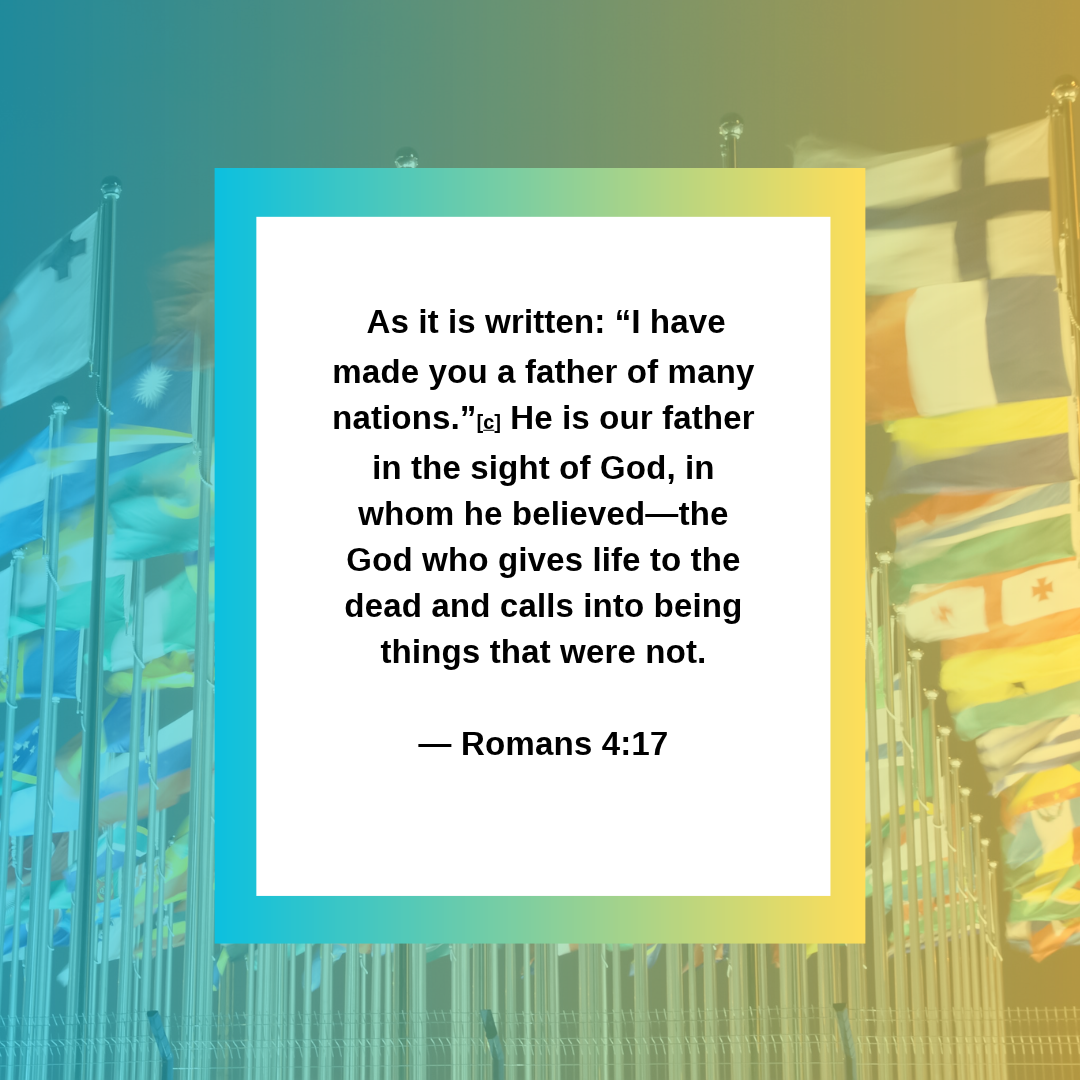
"The God who gives life to the dead and calls into being things that were not," Romans 4:17. This verse should awaken something powerful in every believer. Paul describes a God who is not intimidated by impossible circumstances. Abraham was nearly one hundred years old, and Sarah was beyond the natural age of childbirth. Yet God's promise remained alive.
Consider what this means for Christians facing spiritual opposition today. The world may appear increasingly hostile toward biblical values, but God has not surrendered His authority. His truth has not expired, His power has not diminished, and His promises have not become irrelevant. We must be careful not to confuse cultural opposition with God's absence. The presence of resistance does not mean the absence of God.
Sometimes the greatest test of faith is not whether we can praise God when everything is going well, but whether we can remain obedient when standing for righteousness becomes unpopular. God does not need favorable circumstances to fulfill His promises.
Faith, Obedience & the Battle Against Compromise
One of the greatest misunderstandings in Christianity is the relationship between faith and obedience. Some believe that because salvation comes through faith, obedience is optional. Others believe that religious activity and good works can earn God's acceptance. Paul challenges both misunderstandings.
We are not saved by our works, but genuine faith produces obedience. We do not obey to purchase God's love. We obey because we trust Him. For today's believer, this means refusing to exchange biblical convictions for cultural approval. It means choosing integrity when dishonesty is rewarded, purity when compromise is celebrated, forgiveness when bitterness feels justified, and truth when deception appears more convenient.
This is spiritual warfare at the level of everyday living. The battle is not simply about what happens in the world around us. It is also about what happens within us. Will fear silence our witness? Will pressure weaken our convictions? Will the desire for acceptance become greater than our desire to please God? Abraham's faith teaches us that trusting God must become more than something we profess. It must become something we demonstrate through obedience.
The Resurrection Changes Everything
Paul concludes by connecting Abraham's faith to the resurrection of Jesus Christ. Abraham believed in the God who could bring life from what appeared dead. Christians believe in the God who raised Jesus from the grave. Jesus was delivered over for our sins and raised for our justification. This is the foundation of our hope and the reason our faith must remain anchored in Him. Our confidence is not that the world will always applaud righteousness. It is not that following Christ will always be comfortable. Our confidence is that the risen Jesus has already secured the victory that matters most. The world may challenge our faith, but it cannot overturn the resurrection.
We do not stand for righteousness because the battle is easy. We stand because the One we serve is worthy. And when the pressure increases, when compromise becomes tempting, and when the darkness appears overwhelming, remember Abraham. Faith does not fold because the world pushes back. Faith holds firmly to the God who gives life to the dead. When the world changes, God's Word remains. And when the world stands against your faith, stand firmly with the God who never breaks His promises.